
A prostate cancer diagnosis instantly propels a man into a high-stakes decision-making process. Once initial imaging and biopsies confirm the presence of localized disease, patients are typically presented with two primary treatment pathways: robotic prostatectomy (surgical removal) or radiation therapy (external beam radiation, proton therapy, or radioactive seeds).
For many men, evaluating these choices creates immense anxiety. Radiation is often presented as a non-invasive alternative, while surgery is viewed as a major physical intervention. However, looking strictly at long-term cancer control reveals a fundamental diagnostic difference: surgery physically removes the tumor and provides exact pathological confirmation, whereas radiation leaves the organ inside the body with unverified cells.
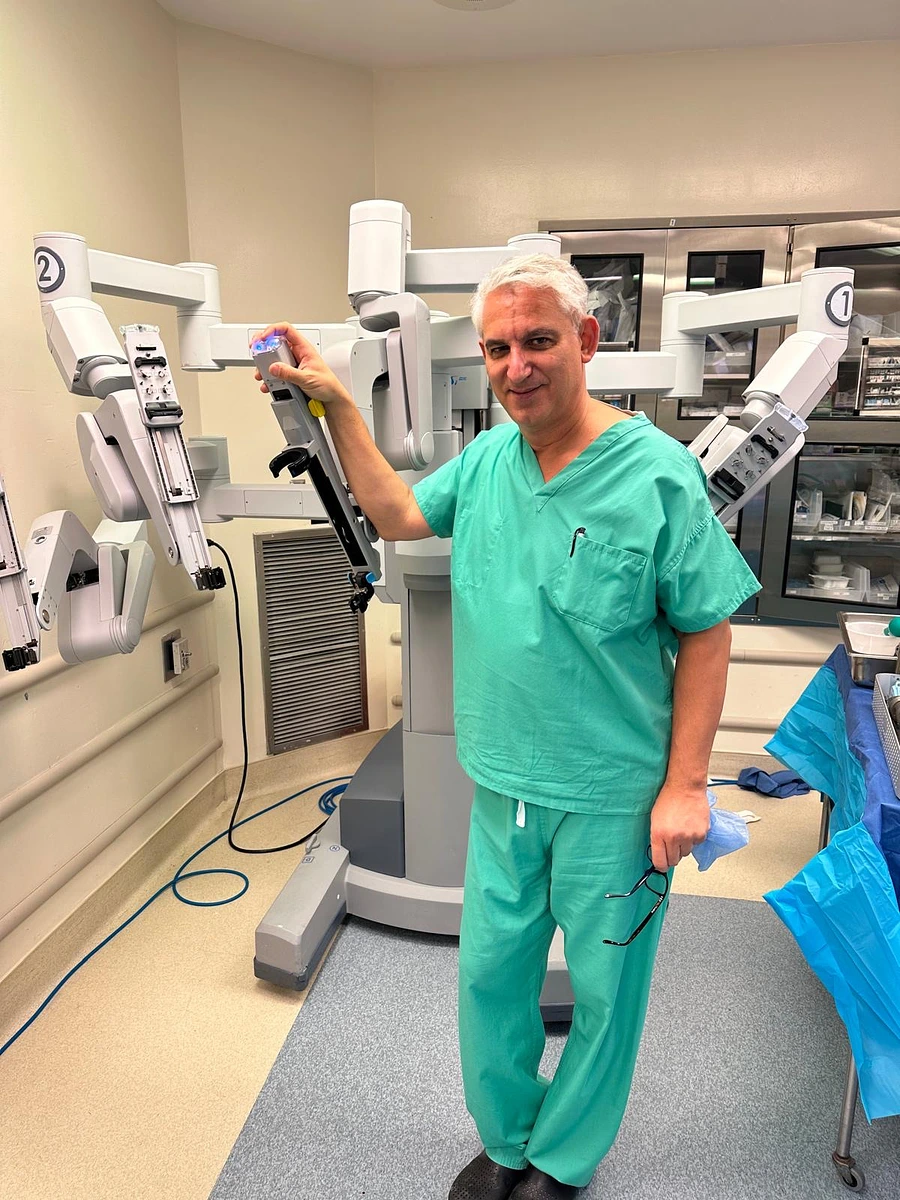
As Director of Men’s Health and Urologic Oncology at St. Francis Hospital & Heart Center in Roslyn, New York, Dr. David Samadi provides men across Long Island with the strict “Samadi Guarantee”—executing 100% of every robotic procedure personally to deliver complete cancer eradication and total diagnostic clarity.
The Pathological Advantage: Removing Guesswork
The single greatest clinical advantage of surgical removal over radiation therapy is the immediate access to complete pathological staging.
When a patient chooses radiation therapy, treatment planning relies entirely on the initial needle biopsy—a sample that evaluates only a tiny fraction of the prostate tissue. Radiation aims to destroy cancer cells in situ, meaning the tumor is never physically examined after treatment begins. Doctors must rely on tracking PSA levels over months and years to infer whether the radiation successfully eliminated every malignant cell.
Conversely, when Dr. David Samadi performs a robotic radical prostatectomy using his proprietary SMART (Samadi Modified Advanced Robotic Technique), the entire prostate gland and adjacent lymph nodes are extracted intact and sent directly to the pathology lab for comprehensive analysis:
- True Gleason Score Verification: Up to 30% of prostate needle biopsies under-stage the true aggressiveness of the cancer. Post-surgical pathology provides an exact, definitive Gleason score across the entire gland.
- Surgical Margin Assessment: Pathologists examine the outer edges of the removed tissue. Achieving “negative margins” provides visual, microscopic confirmation that zero cancer cells remain at the surgical boundaries.
- Lymph Node Staging: Direct pathological analysis of removed pelvic lymph nodes definitively determines whether micro-metastasis has occurred, allowing for immediate, targeted adjustments to care.
Understanding Secondary Treatment Options
When evaluating surgery versus radiation, patients must consider the long-term strategic timeline. In oncology, maintaining clear secondary treatment options if cancer returns is critical.
[Robotic Surgery First] ──> Cancer recurs? ──> Radiation Therapy remains a safe, effective option.
VS.
[Radiation First] ──> Cancer recurs? ──> Salvage Surgery is highly complex with severe risks.
- Radiation After Surgery (Adjuvant / Salvage Radiation): If post-surgical PSA monitoring indicates microscopic recurrence years later, the patient’s pelvic tissue remains un-irradiated. Radiation therapy can be applied cleanly to the empty prostatic bed with high success rates and low complication profiles.
- Surgery After Radiation (Salvage Prostatectomy): If cancer recurs inside a prostate that was previously irradiated, the surrounding tissue has suffered extensive radiation damage, scarring, and loss of blood supply. Performing “salvage” surgery on irradiated tissue carries significantly elevated risks of severe incontinence, tissue necrosis, and rectal injury.
Long-Term Side Effects and Comparative Outcomes
Both surgery and radiation carry risks regarding urinary and sexual function, but the timing and nature of these side effects differ dramatically:
| Outcome / Metric | Robotic Prostatectomy (Dr. Samadi Protocol) | External Beam / Seed Radiation |
| Pathological Confirmation | 100% definitive via full tissue analysis | None; relies on PSA trends over time |
| Initial Side Effects | Temporary urinary catheter (~7 days) | Acute fatigue, urinary frequency, dysuria |
| Long-Term Urinary Health | 97% continence rate; improves continuously | Risk of late-onset radiation cystitis & strictures |
| Erectile Function Timing | Drops initially, recovers over 12–24 months (85%) | Declines progressively over 2 to 5 years |
| Secondary Malignancy Risk | 0% | Small risk of secondary bladder/rectal cancer |
With radiation therapy, side effects often manifest slowly. Radiation proctitis (rectal bleeding), radiation cystitis (chronic bladder inflammation), and progressive erectile decay can emerge 3 to 10 years following treatment due to radiation-induced vascular damage.
The SMART Technique Synergy at St. Francis Hospital
Choosing robotic surgery does not mean sacrificing long-term quality of life. Dr. David Samadi’s SMART procedure approaches the prostate from the “inside out,” eliminating heat-induced nerve damage through an athermal, heat-free dissection.
By avoiding electrocautery near the neurovascular bundles and implementing a clipless, suture-free Dorsal Vein Complex (DVC) protocol, Dr. Samadi protects the delicate urinary sphincter mechanism. This technical discipline delivers exceptional functional outcomes:
- 97% long-term continence rate, with many men regaining pad-free control shortly after catheter removal.
- 85% natural potency preservation rate in eligible candidate patients.
- Consistently completed in under 90 minutes, minimizing time under general anesthesia.
Conclusion
Choosing how to treat prostate cancer requires balancing immediate peace of mind with long-term security. While radiation therapy offers a non-surgical initial approach, robotic prostatectomy provides the unique power of definitive pathological staging—physically removing the disease and leaving zero doubt about what was inside your body.
Through the Samadi Guarantee at St. Francis Hospital in Roslyn, men across Long Island can access master-level robotic oncology, eliminating their cancer while protecting their daily independence and intimate health.
Contact the Samadi Robotics Center today at 212-365-5000 to schedule a private consultation or second opinion at our East Hills office located at 2200 Northern Blvd., Suite 120, Roslyn, NY.
 212-365-5000