
For decades, genetic screening for BRCA1 and BRCA2 gene mutations was viewed almost exclusively through the lens of women’s health. However, modern molecular urology has exposed a critical truth: inherited genetic mutations play a profound role in male oncology, particularly in driving aggressive, early-onset prostate cancer.
While roughly 10% to 15% of all prostate cancer diagnoses are linked to hereditary factors, men carrying a BRCA2 mutation face up to an eightfold increase in prostate cancer risk, alongside a significantly higher probability of developing high-grade, fast-growing tumors.
At St. Francis Hospital & Heart Center in Roslyn and his private practice in East Hills (2200 Northern Blvd), Dr. David Samadi provides high-risk men with a proactive, precision-guided screening framework. Moving beyond standard age-based guidelines, Dr. Samadi utilizes early biomarker baseline testing, genetic counseling, and multi-parametric MRI imaging to catch aggressive hereditary cancers long before physical symptoms appear.
Understanding the Inherited Risk Spectrum
Hereditary prostate cancer stems from gene alterations passed down through either parent. When evaluating familial risk, doctors look beyond a father’s or brother’s prostate health to examine the entire maternal and paternal cancer history.
[Maternal / Paternal Inherited Mutations]
│
├─► BRCA2 / BRCA1 Mutations ──► Impaired DNA Repair → Aggressive Tumor Growth
│
├─► HOXB13 Gene Mutation ──► Strongly Linked to Early-Onset (<55) Cancers
│
└─► Lynch Syndrome (MSH2/MLH1) ──► Increased Risk Across Urologic & GI Cancers
Key Genetic Risk Drivers:
- BRCA2 & BRCA1 Mutations: Essential for DNA repair. Mutations in BRCA2 carry the strongest correlation with aggressive prostate malignancies, early metastasis, and worse outcomes if undetected.
- HOXB13 Mutation: A hereditary gene variant strongly associated with familial prostate cancer, particularly in men diagnosed before age 55.
- Family History Density: Having one first-degree relative (father or brother) doubles your risk. Having two or more close relatives elevates risk by 5 to 11 times.
- Cross-Cancer Lineage: A family history of breast, ovarian, pancreatic, or colorectal cancers signals potential germline mutations that heighten male urologic risk.
The Accelerated Diagnostic Protocol for High-Risk Men
Standard guidelines recommend average-risk men begin discussing PSA screening at age 50. For men with documented genetic mutations or strong family histories, waiting until 50 can prove dangerous.
[Age 40 Baseline PSA & Free/Total Ratio] ──► Track Annual PSA Velocity
│
▼
[Targeted Genetic Counseling] ──► Identify Germline Mutations (BRCA2, HOXB13)
│
▼
[Baseline High-Resolution mpMRI] ──► 3D Anatomical Mapping & MRI-Fusion Target Biopsy
1. Baseline Screening at Age 40
Dr. Samadi recommends establishing a baseline PSA and Free PSA ratio at age 40 (or 10 years younger than the earliest family diagnosis) for men with a known family history or African-American heritage. Establishing an early baseline allows clinicians to track PSA velocity—the rate of PSA change over time—which serves as a critical indicator of aggressive disease.
2. Multi-Parametric MRI (mpMRI) Surveillance
Rather than relying on random needle biopsies, Dr. Samadi incorporates high-resolution 3D mpMRI. This non-invasive imaging visualizes suspicious lesions with millimeter precision, ensuring that if a biopsy is required, it is targeted directly to the lesion under real-time fusion guidance.
Standard Risk vs. High-Risk Genetic Screening Protocol
| Metric / Clinical Parameter | Standard Population Screening | Dr. Samadi High-Risk Genetic Protocol |
| Initial Screening Age | Age 50 | Age 40 (or 10 years before earliest family case) |
| Biomarker Scope | Total PSA test only | Total PSA, Free PSA Ratio, & PSA Velocity |
| Genetic Panel Testing | Rarely offered in primary care | Recommended for BRCA1/2, HOXB13, & Lynch Syndrome |
| Imaging Protocol | Only after abnormal biopsy | Baseline 3D mpMRI mapping prior to intervention |
| Surgical Strategy (If Needed) | Generic radical removal | SMART Athermal Robotic Surgery with Nerve Sparing |
Definitive Treatment: The SMART Robotic Advantage
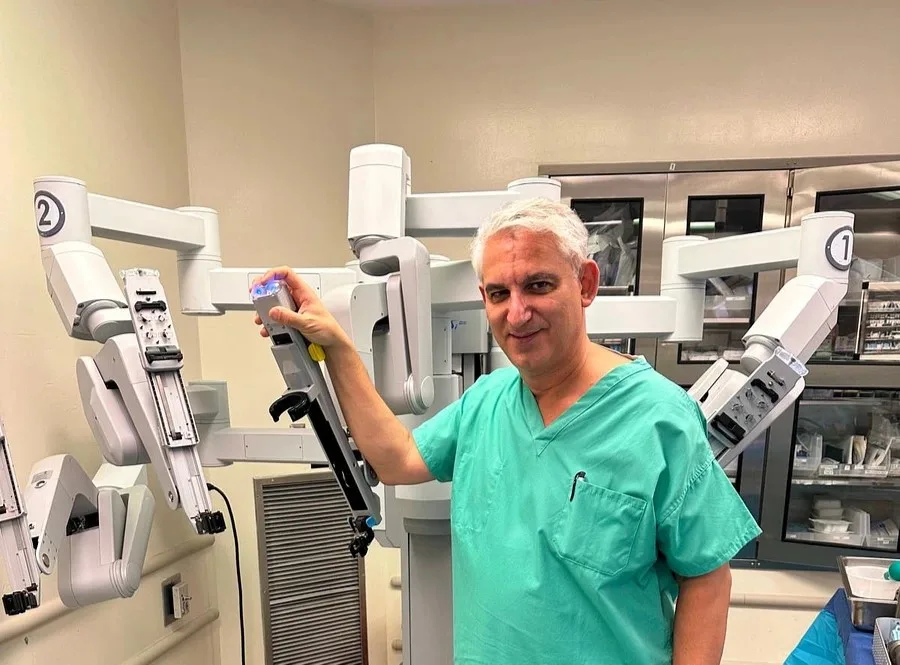
When early screening uncovers an aggressive hereditary tumor, immediate, definitive intervention offers the highest cure rate. Through his proprietary SMART (Samadi Modified Advanced Robotic Technique) procedure, Dr. Samadi provides total oncological control while prioritizing patient quality of life.
- Complete Tumor Elimination: Surgical removal of the entire prostate gland and pelvic lymph nodes provides true pathological staging, confirming negative margins.
- Athermal Nerve Preservation: Utilizing cold micro-instruments without electrocautery heat, Dr. Samadi protects the delicate neurovascular bundles responsible for erectile function and urinary control.
- The Samadi Guarantee: 100% of every surgical procedure is personally performed by Dr. David Samadi, ensuring master-level execution built over more than 10,000 personal cases.
Conclusion
A family history of cancer or a confirmed BRCA mutation is not a guarantee of disease—it is an urgent call to action. By replacing passive waiting with early baseline screening, targeted diagnostics, and expert urologic care, you can take control of your long-term health and catch potential issues at their most treatable stage.
CTA: Protect your future with a tailored genetic risk assessment. Contact the Samadi Robotics Center today at 212-365-5000 to schedule a consultation at our East Hills office located at 2200 Northern Blvd., Suite 120, Roslyn, NY.
 212-365-5000