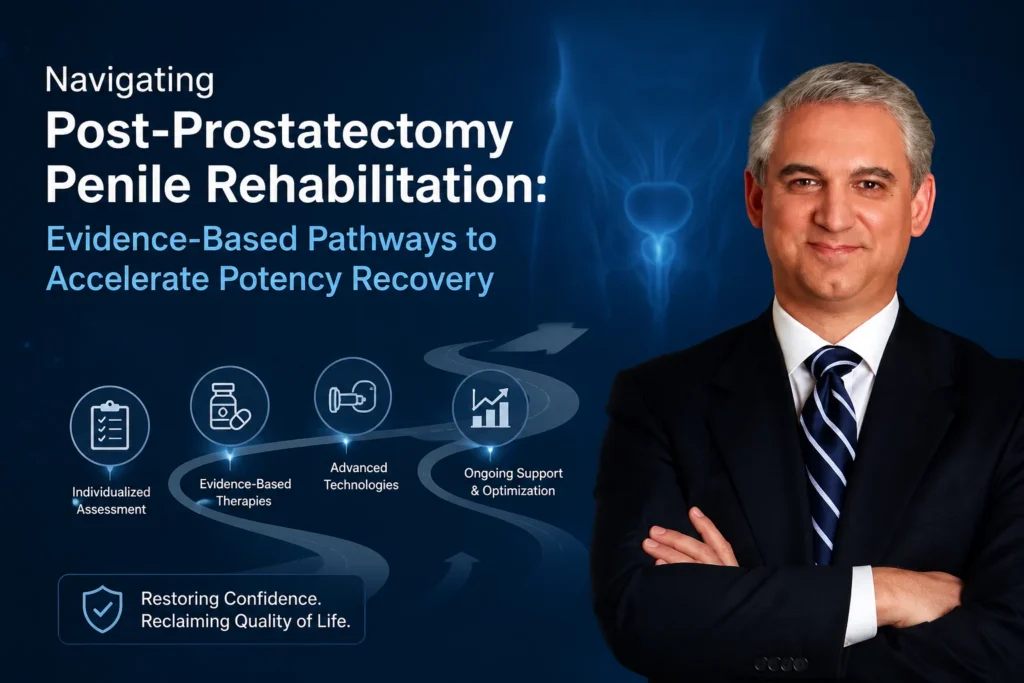
For men undergoing radical prostatectomy, achieving a complete cancer cure is the primary objective. However, long-term quality of life—specifically the preservation and recovery of erectile function—remains an equally vital concern. Even when a master surgeon performs a meticulous, bilateral nerve-sparing procedure, post-operative erectile dysfunction (ED) is a natural, temporary response to surgical manipulation.
The primary cause of temporary post-prostatectomy ED is neuropraxia—a state in which the delicate neurovascular bundles surrounding the prostate are stunned or inflamed during surgery. While these delicate nerves can take anywhere from 6 to 18 months to fully regenerate and resume normal electrical transmission, the smooth muscle tissue within the penis requires active maintenance. Without regular blood flow and oxygenation during this healing window, cavernous tissue can suffer micro-fibrosis and structural loss of elasticity.
At St. Francis Hospital & Heart Center in Roslyn, New York, Dr. David Samadi combines master-level surgical nerve preservation with a structured Post-Prostatectomy Penile Rehabilitation Protocol. Designed to keep erectile tissue oxygenated and elastic while nerves heal, this evidence-based pathway helps men across Long Island accelerate potency recovery and regain sexual intimacy.
The Science of Penile Rehabilitation: Preventing Cavernous Hypoxia
In a healthy state, nocturnal and spontaneous erections flood the corpora cavernosa (erectile chambers) with oxygen-rich arterial blood. During the post-operative neuropraxia phase, these natural automatic erections temporarily cease.
[Nerve Neuropraxia (Temporary Stun)] ──► Absence of Spontaneous Erections
│
▼
[Cavernous Tissue Hypoxia] ──► Risk of Collagen Deposition & Fibrosis
│
▼
[Early Penile Rehabilitation] ──► Targeted Oxygenation & Tissue Preservation
Penile rehabilitation is a proactive therapeutic strategy designed to artificially introduce oxygenated blood flow into the erectile chambers during the nerve recovery period. By preventing tissue hypoxia and smooth muscle atrophy, early rehabilitation ensures that when the neurovascular bundles complete their biological healing, the erectile tissue remains structurally capable of achieving rigid, spontaneous erections.
Multi-Modality Rehabilitation: The Samadi Post-Op Protocol
Initiated shortly after catheter removal (typically 7 days post-surgery), Dr. Samadi’s rehabilitation protocol utilizes a layered, multi-component strategy tailored to each patient’s baseline function and recovery trajectory:
[Catheter Removal (Day 7)] ──► Low-Dose PDE5 Inhibitor Therapy (Tissue Oxygenation)
│
▼
[Month 1 to 3 Phase] ──► Vacuum Erection Device (VED) + Pelvic Floor Rehab
│
▼
[Escalation (If Needed)] ──► Intracavernous Injections (ICI) or Intraurethral Therapy
1. Low-Dose PDE5 Inhibitor Therapy (Daily Dosing)
Phosphodiesterase-5 (PDE5) inhibitors (such as daily low-dose Tadalafil/Cialis or Sildenafil/Viagra) serve as the foundation of early rehabilitation. Rather than using these medications strictly for on-demand sexual attempts, daily low-dose regimens promote continuous micro-vascular dilation, encouraging baseline blood flow to oxygenate cavernous smooth muscle.
2. Vacuum Erection Device (VED) Therapy
A Vacuum Erection Device uses gentle negative pressure to draw arterial blood directly into the penis. Using a VED for a few minutes daily—without applying a constriction ring—serves as a non-pharmacological “exercise” for the erectile tissue, stretching smooth muscle fibers and maintaining penile length and girth.
3. Intracavernous Injection (ICI) Therapy
For men experiencing delayed nerve recovery or those who do not initially respond to oral PDE5 inhibitors, Intracavernous Injections (Alprostadil / Bimix / Trimix) provide an effective therapeutic bridge. By delivering vasodilating agents directly into the cavernous tissue, ICI produces a reliable, oxygenating erection independent of nerve signals, preventing long-term tissue changes while neurovascular bundles regenerate.
Rehabilitation Pathways Compared
| Therapy Modality | Primary Mechanism | Primary Rehabilitation Role | Patient Advantage |
| Daily PDE5 Inhibitors | Enzyme inhibition; enhances nitric oxide | Baseline oxygenation & tissue conditioning | Convenient daily oral dosing |
| Vacuum Device (VED) | Mechanical negative-pressure draw | Maintains elasticity & prevents length loss | Non-pharmacological; zero drug side effects |
| Penile Injections (ICI) | Direct vascular smooth muscle relaxation | Guarantees rigid erection & deep hypoxia reversal | Works independently of nerve recovery stage |
| Pelvic Floor Rehab | Muscle strengthening (Levator Ani) | Improves rigidity maintenance & orgasmic control | Enhances both continence and sexual function |
Surgical Foundation: Why the SMART Technique Drives Potency
While post-operative rehabilitation preserves penile tissue, ultimate potency recovery relies heavily on the quality of the initial nerve-sparing surgery.
Dr. David Samadi’s proprietary SMART (Samadi Modified Advanced Robotic Technique) procedure optimizes potency recovery through distinct technical principles:
- Athermal (Heat-Free) Dissection: Traditional electrocautery generates intense localized heat that can permanently damage delicate neurovascular fibers running mere millimeters from the prostate capsule. Dr. Samadi utilizes cold micro-instruments, eliminating thermal injury to nerve tissue.
- “Inside-Out” Anatomical Approach: By approaching the prostate from the inside of the pelvic floor and working outward, Dr. Samadi visualizes and preserves the neurovascular bundles under 10x 3D magnification before touching adjacent tissue.
- Clipless Vascular Control: Avoiding compressive metal clips near the nerve bundles reduces postoperative local inflammation, accelerating the recovery from neuropraxia.
Conclusion
Recovering sexual potency after prostate cancer surgery is a gradual journey that requires active therapeutic management alongside expert surgical care. By combining master-level athermal nerve preservation with a structured post-operative rehabilitation protocol, Dr. David Samadi provides men across Long Island with a clear, evidence-based pathway back to complete potency and quality of life.
CTA:Take control of your post-treatment recovery and intimacy. Contact the Samadi Robotics Center today at 212-365-5000 to schedule a personalized potency evaluation or consultation at our East Hills office located at 2200 Northern Blvd., Suite 120, Roslyn, NY.
 212-365-5000