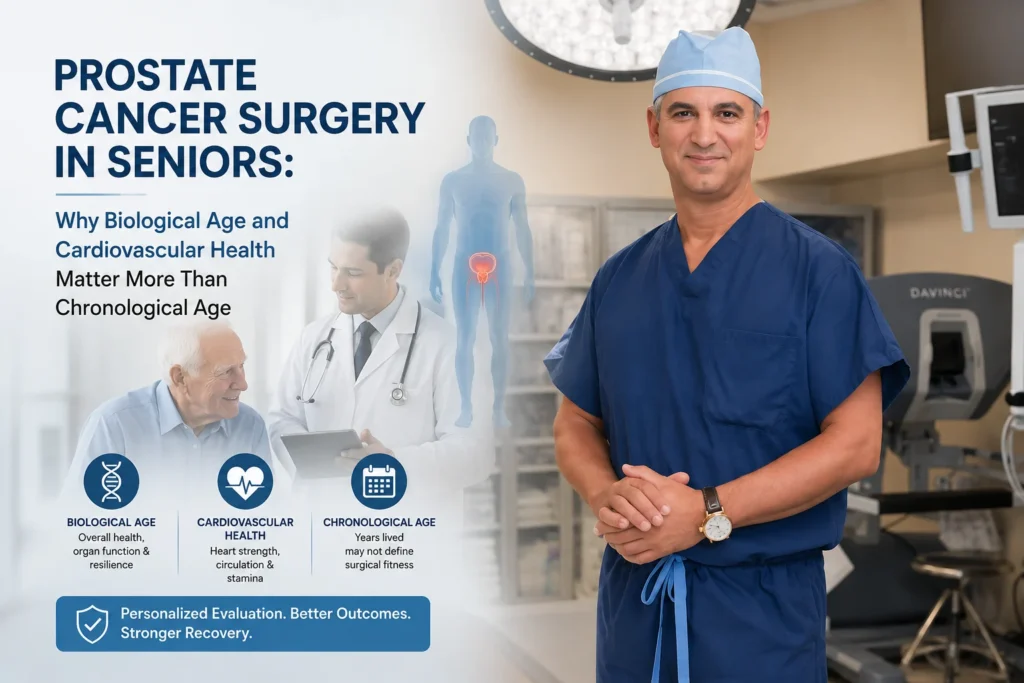
A prostate cancer diagnosis in a man in his late 60s, 70s, or early 80s was historically met with a standardized clinical reaction: automatic referral for radiation therapy or active surveillance simply based on the birth date on his medical chart. Older men were frequently told that radical prostatectomy was too physically demanding, regardless of their active lifestyles, mental clarity, or baseline physical fitness.
In modern urologic oncology, relying solely on chronological age is an obsolete practice. A healthy, active 74-year-old who runs three miles a day and possesses strong cardiovascular health often has a far better physiological recovery capacity than a sedentary 58-year-old with unmanaged diabetes and coronary artery disease.
As Director of Men’s Health and Urologic Oncology at St. Francis Hospital & Heart Center in Roslyn, New York,Dr. David Samadi evaluates senior patients through the lens of biological age and organ system resilience. Backed by his strict “Samadi Guarantee”—personally performing 100% of every procedure—Dr. Samadi routinely performs safe, highly effective robotic prostatectomies on healthy older men across Long Island, ensuring they are not denied a definitive surgical cure based on age alone.
Chronological Age vs. Biological Age in Surgical Oncology
Chronological age measures time; biological age measures cellular health, physiological reserve, and cardiovascular function.
When evaluating whether a senior patient is a safe candidate for robotic prostatectomy, assessing physiological performance markers provides a true picture of surgical tolerance:
- Cardiovascular Reserve: Myocardial performance, ejection fraction, and vascular elasticity dictate how well the heart manages anesthesia and fluid shifts during surgery.
- Pulmonary Function: Baseline lung capacity determines how efficiently oxygenation is maintained during laparoscopic insufflation.
- Metabolic Health: Insulin sensitivity and absence of microvascular disease foster rapid wound healing and lower infection risks.
- Physical Functionality & Mobility: Daily activity levels, gait speed, and muscular strength serve as direct predictors of post-operative mobility and early bladder control recovery.
[Patient Assessment]
│
├─► Chronological Age (Birth Year) ──► Low predictive value for surgical recovery
│
└─► Biological Health (Cardiovascular / Mobility) ──► Direct predictor of safe cure & fast healing
The St. Francis Hospital Cardiac Advantage
Operating on senior patients requires a clinical environment capable of managing nuanced cardiovascular health. Performing robotic surgery within St. Francis Hospital & Heart Center—New York’s premier cardiac care institution—provides senior patients with an unrivaled safety net:
- Integrated Cardiac Cleared Pathways: Pre-operative cardiovascular clearance is conducted alongside top-tier cardiologists, optimizing blood pressure, cardiac output, and medication management prior to entering the operating room.
- Dedicated Anesthesiology Expertise: Experienced cardiac anesthesiologists manage fluid balance and intraoperative hemodynamics, maintaining optimal tissue perfusion throughout the procedure.
- Continuous Post-Operative Telemetry: Senior patients receive continuous cardiac monitoring in the post-anesthesia care unit, virtually eliminating the risk of undetected cardiac events.
Minimizing Surgical Stress: The SMART Protocol for Seniors
For older patients, minimizing time under general anesthesia and eliminating surgical trauma are paramount. Dr. David Samadi’s proprietary SMART (Samadi Modified Advanced Robotic Technique) procedure offers distinct physical advantages for senior men:
1. Rapid Surgical Execution (Under 90 Minutes)
Standard robotic prostatectomies in teaching hospitals can extend from three to five hours, increasing fluid shifts and prolonging anesthesia exposure. Dr. Samadi’s master-level surgical efficiency—built on more than 10,000 personal cases—allows him to complete the procedure in under 90 minutes, drastically reducing systemic physiological stress.
2. Athermal (Heat-Free) & Clipless Dissection
Traditional electrocautery utilizes high thermal energy that can cause thermal spread to adjacent structures. Dr. Samadi utilizes cold micro-instruments, avoiding heat damage to the delicate pelvic floor nerves and protecting fragile blood vessels.
3. Ultra-Low Blood Loss Profile
With a blood loss profile near zero, Dr. Samadi’s protocol removes the risk of intraoperative transfusion, protecting senior patients from transfusion-related reactions or cardiovascular fluctuations.
Comparative Recovery: Healthy Seniors vs. Standard Assumptions
| Recovery Metric | Outdated Clinical Assumption | Dr. Samadi Senior Protocol (St. Francis) |
| Primary Age Cutoff | Rigid denial of surgery over age 70–72 | No arbitrary age limit; evaluated on biological fitness |
| Anesthesia Risk | High concern due to 4+ hour operating times | Minimized risk with sub-90-minute procedural time |
| Hospital Stay | Multi-day hospitalization | 99% discharged within 24 hours |
| Pathological Outcome | Incomplete diagnostic staging via radiation | 100% pathological confirmation of total tumor removal |
| Continence Recovery | High risk of permanent diapers | 97% long-term continence with structured pelvic rehab |
Conclusion
A birth date should never automatically disqualify a healthy, active man from choosing the gold standard in prostate cancer care. If you possess strong biological health, excellent cardiovascular function, and an active lifestyle, robotic surgical removal provides the definitive cure and diagnostic clarity you deserve. Through the Samadi Guarantee at St. Francis Hospital in Roslyn, senior men across Long Island can safely achieve cancer-free longevity without compromising their daily independence.
Do not let an arbitrary age cutoff dictate your cancer treatment. Contact the Samadi Robotics Center today at 212-365-5000 to schedule a comprehensive biological evaluation and consultation at our East Hills office located at 2200 Northern Blvd., Suite 120, Roslyn, NY.
 212-365-5000