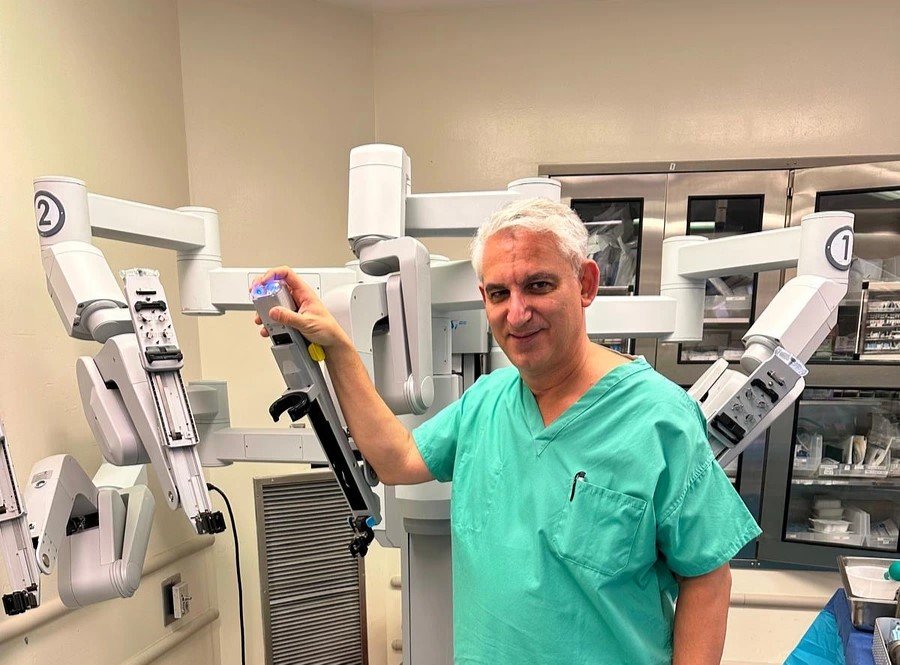
A prostate cancer diagnosis forces a man to quickly balance two critical priorities: completely eradicating the tumor and preserving his long-term daily quality of life. For decades, the standard path toward a definitive surgical cure often carried a heavy, stressful trade-off. Traditional open radical prostatectomies, and even generic robotic approaches, frequently introduced the looming threats of chronic urinary incontinence and permanent erectile dysfunction—side effects that can deeply affect a man’s identity, confidence, and personal relationships.
To minimize these risks, the field of urologic oncology required an anatomical shift. Pioneered and refined over 15 years by Dr. David Samadi, the SMART (Samadi Modified Advanced Robotic Technique) procedure offers a highly optimized, tissue-sparing alternative to standard surgery. As the Director of Men’s Health at St. Francis Hospital & Heart Center in Roslyn, Dr. Samadi has brought this advanced surgical protocol directly to Nassau County. Long Island men can now access a premier, globally recognized cure right in their own neighborhood, avoiding the logistical strain of a city commute.
Understanding the Anatomy of Prostate Recovery
The prostate is a small, walnut-sized gland positioned deep within the male pelvis, tightly surrounded by delicate structural networks that govern essential bodily functions. The ultimate success of a radical prostatectomy is defined by achieving the “Trifecta”:
- Complete cancer eradication (negative surgical margins).
- Full, rapid restoration of bladder control.
- Preservation of natural sexual potency.
Achieving all three milestones simultaneously is an extraordinary microsurgical challenge. The bladder sits directly on top of the prostate, and the urethra passes straight through its center. Furthermore, the microscopic nerves and blood vessels responsible for triggering erections wrap tightly along the outer shell of the gland. Standard surgeries that utilize aggressive tissue pulling, extensive cutting, or intense heat can easily shock or permanently damage these adjacent structures, leading to prolonged recovery timelines.
How the SMART Technique Rewrites the Surgical Pathway
Traditional robotic prostatectomies typically approach the pelvis from the “outside in,” following older, open-surgery blueprints mapped onto a digital interface. This standard pathway frequently involves widely slicing the protective pelvic tissue and placing large, heavy sutures to control bleeding.
Dr. David Samadi alters this dynamic entirely by approaching the prostate from the “inside out.” This technical modification allows him to isolate and remove the tumor while leaving the critical surrounding support systems completely undisturbed.
1. Athermal Nerve Sparing (85% Potency Retention)
The fragile neurovascular bundles governing erectile function are highly sensitive to thermal energy. Standard robotic surgeries rely heavily on electrocautery (electrical heat) to seal blood vessels as they dissect the prostate. However, electrical currents can cause dangerous “thermal spread,” accidentally baking or shocking the nearby microscopic nerves. The SMART technique utilizes an athermal (completely heat-free) dissection, using cold micro-instruments to carefully peel the prostate away from the nerve bundles, resulting in an exceptional 85% natural potency preservation rate.
2. Preserving the Endopelvic Fascia
Standard operations begin by slicing open the endopelvic fascia—the fibrous layer of tissue lining the pelvic wall—to expose the surgical field. The SMART protocol actively avoids opening this structure. Leaving the endopelvic fascia completely intact maintains the natural anatomical ceiling of the pelvis, keeping the bladder securely supported and dramatically reducing baseline post-operative complications.
3. Suture-Free Control of the Dorsal Vein Complex (97% Continence)
To manage blood flow during a routine prostatectomy, surgeons traditionally place large structural sutures directly through the Dorsal Vein Complex (DVC), a primary vascular network sitting over the urinary sphincter. This compression can shorten the functional urethra and put destructive tension on the natural urinary valve. Dr. Samadi deploys a proprietary clipless and suture-free DVC protocol, securing immediate vascular control without putting mechanical stress on the sphincter. Sparing this valve allows 97% of SMART patients to achieve a rapid return to full, pad-free bladder control.
The Value of local, Specialized Care on Long Island
| Patient Milestone | Traditional Manhattan Commute | Dr. Samadi’s Long Island Protocol |
| Pre-Op & Post-Op Visits | Hours spent on the LIE or LIRR | Handled minutes away in East Hills (Roslyn) |
| Surgical Execution | Often delegated to residents in training | 100% executed by Dr. Samadi at St. Francis |
| Surgical Efficiency | Standard 2 to 4 hours | Consistently completed in under 90 minutes |
| Hospital Stay | Multiple days of institutional recovery | 99% of patients safely discharged within 24 hours |
Sparing the body from excessive tissue traction and minimizing the duration of general anesthesia heavily protects cardiovascular and lung function, reducing post-operative fatigue. Furthermore, recovering locally means that essential post-op tracking and the standard removal of the temporary urinary catheter around day 7 are completed comfortably close to home, completely eliminating the physical stress of a long city commute while healing.
Conclusion + CTA
Conquering prostate cancer does not require you to compromise your masculinity, daily independence, or peace of mind. Through the advanced refinement of the SMART technique at St. Francis Hospital, men across Long Island can access the absolute pinnacle of robotic oncology right in Nassau County. Choosing a high-volume specialist with a personal track record of over 10,000 successful procedures ensures your cure is handled with absolute precision, protecting your future health and your quality of life.
CTA: Visit roboticoncology.com today or call 212-365-5000 to schedule a private consultation or an expert second opinion at our Long Island office located at 2200 Northern Blvd., Entrance E, Suite 120, East Hills, NY.
 212-365-5000