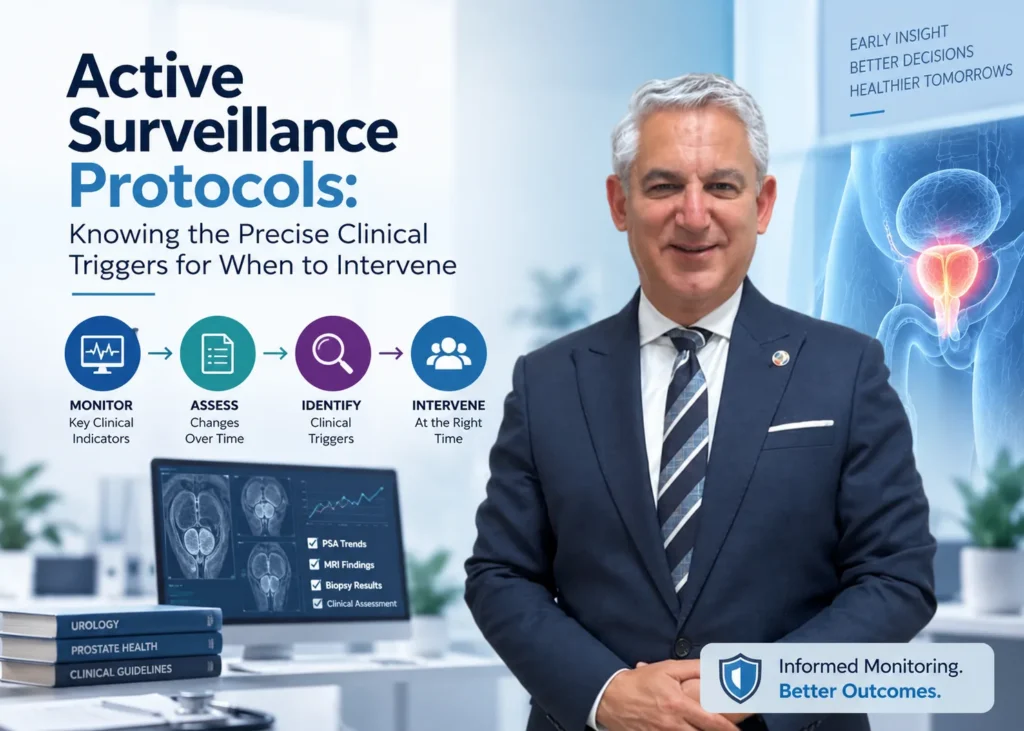
Receiving a prostate cancer diagnosis triggers an immediate reaction to seek prompt removal of the tumor. However, for a select group of men diagnosed with low-grade, organ-confined disease (Gleason 6 / Grade Group 1), immediate surgery or radiation may not be required right away. In these low-risk scenarios, Active Surveillance (AS)—a protocol of continuous diagnostic monitoring—allows men to defer invasive treatment, avoiding procedural side effects while safely monitoring the cancer.
Active surveillance is not “passive waiting” or ignoring the disease. It is an intentional clinical strategy. The success of active surveillance depends on knowing when to step off surveillance and transition to curative intervention.
As Director of Men’s Health and Urologic Oncology at St. Francis Hospital & Heart Center in Roslyn and through his private practice in East Hills (2200 Northern Blvd), Dr. David Samadi establishes precise, objective safety parameters for men on active surveillance. By pairing longitudinal biomarker tracking with high-resolution imaging and master-level robotic surgery when indicated, Dr. Samadi ensures that surveillance never compromises long-term cure.
The Active Surveillance Monitoring Engine
To ensure safety, active surveillance requires a scheduled diagnostic routine to catch any sign of tumor progression at its earliest biological stage:
[Quarterly PSA & Free/Total Ratio] ──► Track Velocity & Density Dynamics
│
▼
[Annual Baseline 3D mpMRI] ──► Monitor Volume Expansion & PIRADS Changes
│
▼
[Targeted Surveillance Biopsy] ──► Pathological Re-Staging (12 to 24 Months)
- PSA Testing (Every 3–6 Months): Tracks longitudinal PSA fluctuations, calculating PSA Velocity (rate of rise over time) and PSA Density (PSA relative to prostate volume).
- Multiparametric MRI (mpMRI) (Every 12–18 Months): High-definition 3D imaging evaluates whether the lesion has expanded in size or developed aggressive radiological features (PI-RADS score upgrade).
- Confirmatory & Periodic Fusion Biopsy: Targeted MRI-fusion biopsies sample suspicious regions to verify whether the cellular pathology remains low-grade.
The 5 Precise Clinical Triggers for Intervention
Active surveillance remains safe only as long as the cancer shows no signs of higher biological aggression. Dr. David Samadi utilizes five objective clinical triggers that signal it is time to transition from monitoring to curative surgical treatment:
┌──► 1. Pathological Upgrade (Gleason 6 ──> Gleason 7+)
├──► 2. Rapid PSA Velocity / PSA Density Increase
[SURVEILLANCE TRIGGERS] ─────┼──► 3. Lesion Volume Expansion on mpMRI (PI-RADS Upgrade)
├──► 4. High-Risk Genomic Classifier Scores (Decipher / Oncotype)
└──► 5. Patient Anxiety & Quality-of-Life Shift
1. Pathological Grade Upgrading (Gleason Pattern Change)
The primary objective trigger for intervention is a pathological upgrade on repeat fusion biopsy. If biopsy cores reveal a shift from Gleason 6 (3+3) to Gleason 7 (3+4 or 4+3 / Grade Group 2 or 3), the cancer has developed aggressive potential, making definitive treatment necessary.
2. Rapid PSA Velocity and PSA Density Elevation
While absolute PSA numbers fluctuate naturally due to inflammation or BPH, a steep upward trajectory (PSA Velocity >0.75 ng/mL per year) or a rising PSA Density (>0.15 ng/mL/cc) indicates accelerating cellular activity within the prostate gland.
3. Structural Lesion Expansion on Serial mpMRI
If serial 3D MRI scans show that a monitored lesion has increased significantly in volume, shifted from a PI-RADS 3 to a PI-RADS 4 or 5 rating, or shows signs of approaching the outer prostate capsule, surveillance is stopped to prevent extra-capsular extension.
4. Adverse Genomic Biomarker Profiling
Modern molecular testing (such as Decipher, Oncotype DX, or Prolaris) evaluates the RNA expression of biopsy tissue. If genomic testing reveals high-risk molecular alterations associated with metastasis, immediate intervention is recommended, even if the tissue appears low-grade under the microscope.
5. Psychological Strain and Anxiety
Living with untreated cancer causes ongoing anxiety for some men. If the mental toll of quarterly blood draws and periodic biopsies compromises a patient’s daily peace of mind, transitioning to a definitive cure with excellent functional preservation becomes a valid quality-of-life decision.
Active Surveillance vs. Timely Intervention Trigger
| Clinical Parameter | Safe Active Surveillance Zone | Immediate Intervention Trigger Zone |
| Gleason Score | Gleason 6 (3+3) / Grade Group 1 | Gleason 7 (3+4, 4+3) or higher |
| PSA Density | Low (< 0.15 ng/mL/cc) | Elevated (> 0.15 ng/mL/cc) |
| MRI PI-RADS Score | PI-RADS 1, 2, or stable 3 | PI-RADS 4 or 5 upgrade / volume growth |
| Genomic Risk Score | Low-risk molecular profile | Intermediate-to-high risk genomic markers |
| Biopsy Core Involvement | < 3 positive cores; < 50% core tissue | Multiple positive cores or high volume |
The Transition to Cure: SMART Robotic Surgery
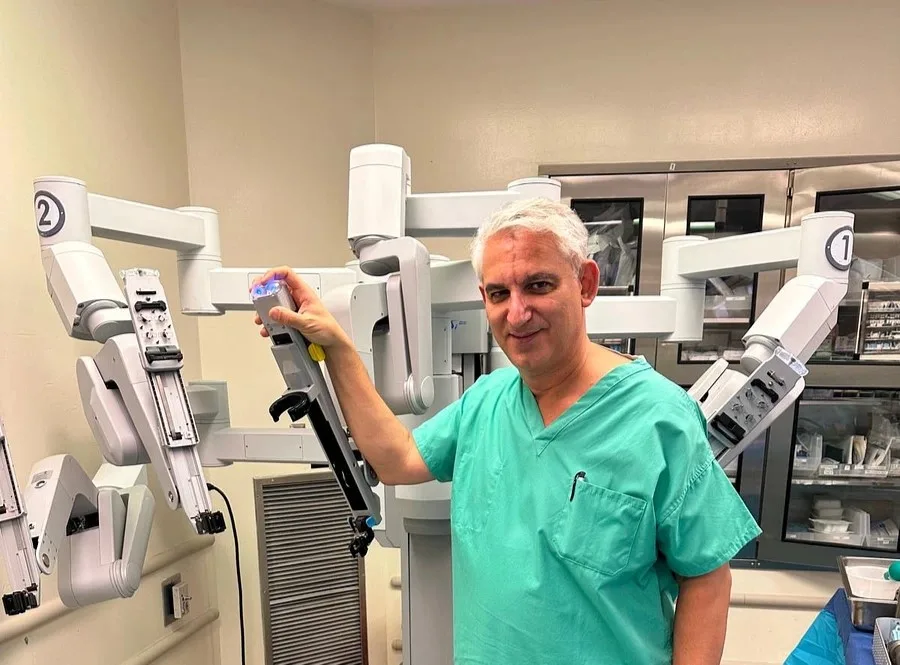
When a clinical trigger indicates it is time to exit active surveillance, Dr. David Samadi provides a seamless transition to definitive cure via his proprietary SMART (Samadi Modified Advanced Robotic Technique) procedure.
Because Dr. Samadi performs 100% of every operation personally under the “Samadi Guarantee,” patients receive master-level robotic execution:
- Athermal (Heat-Free) Dissection: Uses cold micro-instruments without electrocautery heat to preserve the delicate neurovascular bundles responsible for erectile function.
- Inside-Out Anatomical Approach: Avoids opening the endopelvic fascia or suturing the dorsal vein complex, yielding a 97% long-term continence rate and an 85% potency preservation rate in eligible candidates.
- Definitive Cure: Complete removal of the prostate gland delivers total tumor elimination, true pathological staging, and a baseline post-op PSA that drops to zero.
Conclusion
Active surveillance is an effective strategy for low-risk prostate cancer, but it requires diligent monitoring and clear parameters for when to take action. By using objective clinical triggers to guide intervention, you can enjoy peace of mind knowing you are acting at the precise moment to protect your long-term health.
CTA:Whether you need an expert active surveillance monitoring program or a second opinion on intervention triggers, contact the Samadi Robotics Center today at 212-365-5000 to schedule a consultation at our East Hills office located at 2200 Northern Blvd., Suite 120, Roslyn, NY.
 212-365-5000