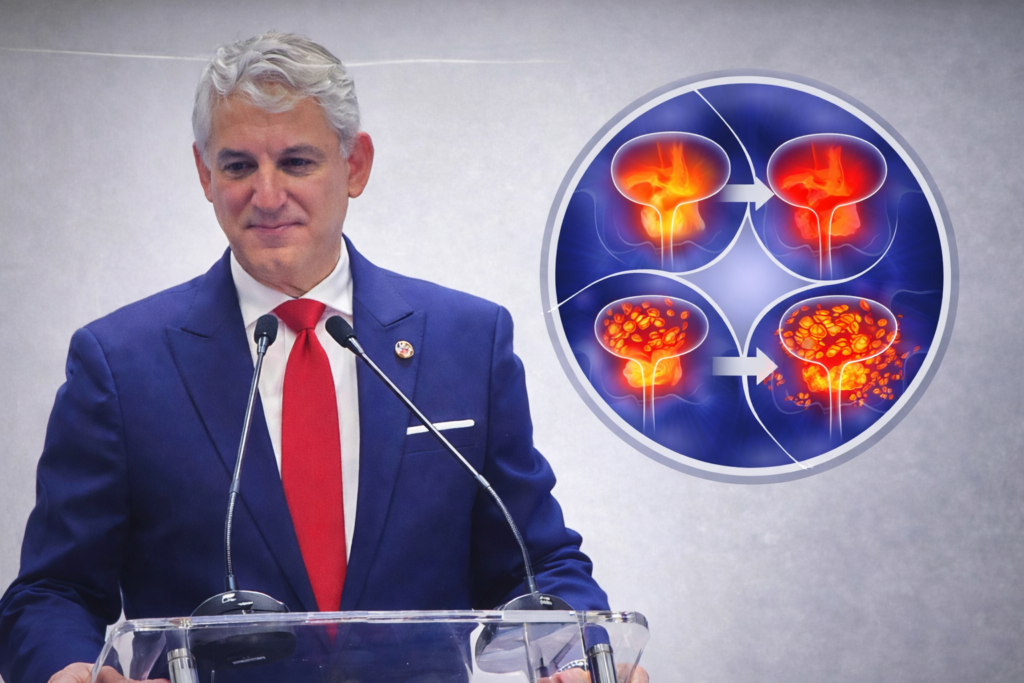
Most men don’t notice prostate cancer right away.
That’s what makes it dangerous.
In the early stages, prostate cancer usually develops quietly. No pain. No obvious symptoms. Nothing that clearly signals something is wrong. And by the time symptoms begin to appear, the disease may already be more advanced.
This is exactly why Dr. David Samadi has spent decades emphasizing early detection, careful monitoring, and precise surgical treatment. As a world-renowned prostate cancer surgeon and Key Opinion Leader frequently featured on Fox News and Newsmax, Dr. Samadi focuses not just on removing cancer — but catching it before it progresses.
Understanding how symptoms change over time helps patients recognize when to seek evaluation.
Let’s walk through how prostate cancer signs typically develop.
Early Stage: Often No Symptoms at All
The earliest stage of prostate cancer is usually silent.
Many patients diagnosed at this stage:
- Feel completely normal
- Have no urinary symptoms
- Experience no pain
- Discover cancer through routine screening
This is why PSA testing and regular checkups matter. Prostate tumors often grow slowly at first, staying confined to the gland without affecting nearby structures.
According to Dr. Samadi, early detection offers the best opportunity for:
- Curative treatment
- Nerve preservation
- Faster recovery
- Better long-term quality of life
The challenge is that most men don’t seek evaluation until symptoms begin.
Early Warning Changes in Urination
As a tumor grows inside the prostate, it can begin pressing on the urethra. This is when urinary changes may appear.
Common early warning signs include:
- Frequent urination, especially at night
- Weak urine stream
- Difficulty starting urination
- Feeling the bladder isn’t fully empty
- Urgent need to urinate
These symptoms are often mistaken for normal aging or benign prostate enlargement. Many patients ignore them for years.
Dr. Samadi frequently explains that urinary symptoms alone don’t confirm cancer — but they should never be dismissed without evaluation.
Local Progression: More Noticeable Symptoms
When prostate cancer grows beyond its earliest stage, symptoms tend to become more noticeable.
Patients may experience:
- Burning or discomfort with urination
- Blood in urine
- Blood in semen
- Erectile dysfunction changes
- Pelvic pressure or discomfort
At this point, the cancer may still be treatable with highly effective options — including advanced robotic surgery techniques like those developed by Dr. Samadi.
His SMART surgical approach focuses on precision removal while protecting surrounding structures whenever possible. The foundations of these techniques were established decades ago and continue to evolve with modern robotic technology.
Advanced Local Disease: Impact on Nearby Structures
If cancer continues to grow untreated, it can affect surrounding tissues.
Symptoms may include:
- Persistent pelvic pain
- Lower back discomfort
- Difficulty emptying the bladder
- Increasing urinary obstruction
- Significant changes in sexual function
These symptoms indicate the disease may be affecting nearby nerves or tissues. At this stage, treatment becomes more complex and outcomes depend heavily on surgical expertise and timing.
Dr. Samadi’s approach focuses on careful staging and individualized treatment planning to prevent progression to this level whenever possible.
Metastatic Disease: When Cancer Spreads
In advanced cases, prostate cancer may spread beyond the prostate to bones or other organs.
Symptoms can include:
- Bone pain (especially hips or spine)
- Unexplained weight loss
- Fatigue
- Leg swelling
- Weakness
At this stage, treatment shifts toward disease control and quality of life rather than cure. This is why early diagnosis remains critical.
Dr. Samadi consistently stresses that prostate cancer is highly treatable when detected early — but outcomes become more complicated the longer it progresses.

Why Progression Is Different for Every Patient
Not all prostate cancers behave the same way.
Some tumors grow slowly over many years. Others are aggressive and progress quickly. Factors that influence progression include:
- Cancer grade and aggressiveness
- Patient age and health
- Genetics
- Tumor location
- Timing of diagnosis
This variability is why treatment decisions require experience and careful evaluation — not guesswork.
How Dr. David Samadi Approaches Prostate Cancer Progression
Dr. Samadi is internationally recognized for his work in robotic prostate cancer surgery and functional outcome preservation. His approach focuses on three priorities:
- Early detection and accurate staging
- Precision surgical technique
- Preservation of urinary and sexual function when safe
He developed the SMART™ (Samadi Modified Advanced Robotic Technique) procedure to improve precision, nerve preservation, and recovery outcomes. The technique builds on surgical principles established decades ago while integrating modern robotic technology.
Patients seek Dr. Samadi not only for prostate cancer treatment, but for his experience managing how prostate cancer progresses — and stopping that progression early whenever possible.
When to Get Checked
Dr. Samadi encourages evaluation if you notice:
- New urinary changes
- Blood in urine or semen
- Persistent pelvic discomfort
- Erectile function changes
- Family history of prostate cancer
- PSA level changes
Even subtle symptoms can be important.
Early evaluation often leads to simpler treatment and better long-term outcomes.
Frequently Asked Questions
Do all prostate cancers cause symptoms?
No. Many early cancers cause no symptoms at all and are found through screening.
How quickly does prostate cancer progress?
Some grow slowly, others more aggressively. Testing and imaging determine risk.
Are urinary symptoms always cancer?
No. Many conditions cause similar symptoms, but evaluation is essential.
Can prostate cancer be cured if caught early?
Yes. Early-stage prostate cancer has very high cure rates with proper treatment.
Does treatment always affect quality of life?
Modern techniques — including nerve-sparing robotic surgery — aim to preserve function whenever possible.
Contact Dr. David Samadi
If you’re experiencing symptoms or want expert evaluation of prostate cancer risk, consultation is the best next step.
Website: https://roboticoncology.com
Address: 485 Madison Avenue, 21st Floor, New York, NY 10022
Phone: 212-365-5000
Dr. Samadi is a world-renowned prostate cancer surgeon, national medical contributor on Fox News and Newsmax, and a leader in advanced robotic prostate surgery focused on both cancer control and quality-of-life outcomes.
 212-365-5000