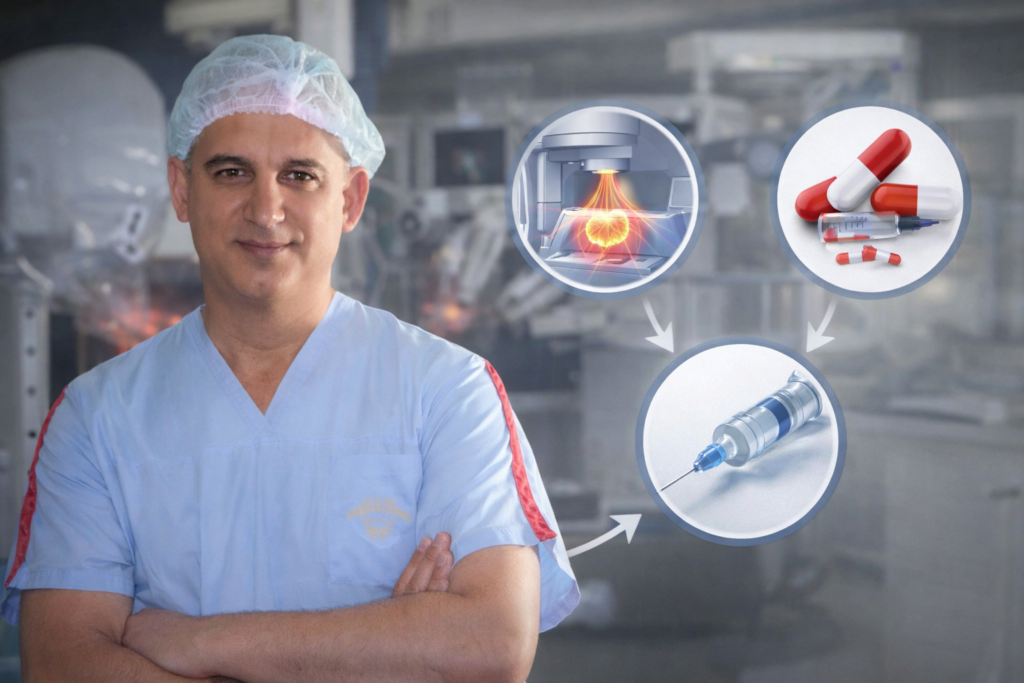
Hearing the words “you have prostate cancer” immediately brings one big question to mind:
What are my options?
The truth is, there isn’t just one path. Treatment decisions depend on the stage of cancer, how aggressive it appears, your age, overall health, and what matters most to you long-term — including urinary control and sexual function.
This is where experience truly matters.
Dr. David Samadi, a world-renowned prostate cancer surgeon and nationally recognized medical contributor on Fox News and Newsmax, has spent decades refining surgical and treatment approaches that focus not only on removing cancer — but preserving quality of life whenever safely possible.
Let’s break down the main treatment options and how doctors actually help patients choose.
1. Active Surveillance (When Immediate Treatment Isn’t Necessary)
Not all prostate cancers need to be treated right away.
For men with:
- Low-risk, localized cancer
- Low PSA levels
- Favorable biopsy results
- No aggressive features
Doctors may recommend active surveillance.
This approach involves:
- Regular PSA testing
- Repeat imaging
- Follow-up biopsies when necessary
The goal is careful monitoring without rushing into surgery or radiation.
Dr. Samadi explains that surveillance is appropriate only for carefully selected patients. It requires strict follow-up. It’s not “doing nothing” — it’s structured monitoring.
When signs show progression, treatment can still be performed with curative intent.
2. Robotic Prostatectomy (Surgical Removal of the Prostate)
For many patients with localized prostate cancer, surgery offers a definitive treatment.
A robotic prostatectomy removes the prostate gland while aiming to preserve surrounding nerves and structures when cancer allows.
Dr. Samadi developed the SMART procedure (Samadi Modified Advanced Robotic Technique), a refined surgical method focused on:
- Precision dissection
- Maximum nerve preservation
- Reduced tissue trauma
- Early urinary recovery
- Protection of erectile function when possible
While the concept of radical prostatectomy has existed for decades, modern robotic advancements have significantly improved visualization and surgical control. Dr. Samadi’s technique builds on surgical foundations established years ago while incorporating today’s robotic precision.
Surgery may be recommended when:
- Cancer is confined to the prostate
- The tumor appears aggressive
- The patient prefers definitive removal
- Long-term cancer control is the priority
For many patients, surgery offers peace of mind — removing the cancer entirely rather than managing it over time.
3. Radiation Therapy
Radiation is another major treatment option.
It can be delivered through:
- External beam radiation therapy (EBRT)
- Brachytherapy (internal radiation seeds)
Radiation may be recommended for:
- Localized cancer
- Patients who are not surgical candidates
- Those who prefer a non-surgical option
While radiation can effectively control cancer, it carries its own risks, including:
- Urinary irritation
- Bowel changes
- Erectile dysfunction
- Long-term tissue effects
Dr. Samadi carefully discusses radiation with patients when appropriate, but he also emphasizes that once radiation is performed, surgical options later can become more complex.
Choosing between surgery and radiation requires thoughtful, individualized discussion.

4. Hormone Therapy (Androgen Deprivation Therapy)
Prostate cancer often depends on testosterone to grow.
Hormone therapy works by lowering testosterone levels or blocking its effect.
This approach is often used:
- In combination with radiation
- For more advanced disease
- When cancer has spread
Hormone therapy does not remove cancer but helps control its progression.
Side effects may include:
- Fatigue
- Hot flashes
- Reduced libido
- Bone thinning
Dr. Samadi ensures patients understand that hormone therapy is often part of a broader treatment strategy rather than a standalone cure.
5. Advanced or Metastatic Treatment Approaches
When prostate cancer spreads beyond the prostate, treatment becomes more complex.
Options may include:
- Combination hormone therapy
- Chemotherapy
- Newer targeted therapies
- Immunotherapy
- Clinical trials
Even in advanced cases, early expert intervention makes a difference in outcomes and long-term quality of life.
How Dr. David Samadi Helps Patients Decide
Treatment decisions are not made in isolation.
Dr. Samadi evaluates:
- PSA levels
- Biopsy results
- MRI findings
- Cancer grade (Gleason score)
- Tumor location
- Patient age
- Overall health
- Personal priorities
He is widely recognized not only for surgical expertise but for judgment — knowing when surgery is appropriate and when it isn’t.
Patients often seek Dr. David Samadi specifically because of:
- His international reputation
- Decades of experience
- Thousands of prostate surgeries performed
- Advanced nerve-sparing expertise
- National leadership and media presence as a Key Opinion Leader
Prostate cancer treatment is not one-size-fits-all. And experience dramatically influences both cancer control and functional outcomes.
What Matters Most in Treatment Decisions
While cancer removal is always the priority, modern prostate cancer care also focuses on:
- Urinary continence preservation
- Erectile function recovery
- Faster return to normal life
- Minimizing long-term side effects
Dr. Samadi’s approach centers on balancing oncologic success with quality-of-life preservation whenever medically safe.
Frequently Asked Questions
Is surgery better than radiation?
It depends on cancer stage, aggressiveness, and patient preference. Both can be effective in the right setting.
Can prostate cancer be cured?
Yes — when detected early and treated appropriately.
Does robotic surgery improve recovery?
Robotic precision can improve visualization and nerve preservation, which may support better recovery outcomes in experienced hands.
Will I lose erectile function after surgery?
Nerve-sparing techniques significantly improve the chance of recovery, but results depend on age, baseline function, and cancer characteristics.
How do I know which option is right for me?
A thorough consultation with an experienced prostate cancer surgeon is the most important step.
Contact Dr. David Samadi
If you’ve been diagnosed with prostate cancer and want clarity about your options, a consultation can provide individualized guidance.
Website: https://roboticoncology.com
Address: 485 Madison Avenue, 21st Floor, New York, NY 10022
Phone: 212-365-5000
Dr. David Samadi is a world-renowned prostate cancer surgeon and nationally recognized medical contributor featured on Fox News and Newsmax. His approach focuses on precision surgery, long-term cancer control, and protecting the functions that matter most to patients.
 212-365-5000