Hearing the words “you have prostate cancer” immediately raises one question for most men.
What are my chances?
Patients want numbers. They want clarity. And they want to understand how serious their situation really is.
The truth is — prostate cancer survival depends heavily on stage at prostate cancer diagnosis. Some forms are highly treatable with excellent long-term outcomes. Others require more aggressive treatment and careful planning.
Understanding prostate cancer survival rates by stage helps patients make better decisions and reduces unnecessary fear.
This guide explains how survival changes across different stages of prostate cancer and how experienced prostate cancer surgeon like Dr. David Samadi help patients achieve the best possible outcomes.
First — What “Survival Rate” Actually Means
Before looking at numbers, it helps to understand what doctors mean by survival.
Most statistics refer to the 5-year relative survival rate. This compares men with prostate cancer to men without cancer over a five-year period.
It does not predict exactly what will happen to an individual patient. Many men live far longer than five years — especially when cancer is found early.
The stage of the cancer is the biggest factor.
Stage 1 Prostate Cancer Survival Rate
Stage 1 prostate cancer is the earliest stage.
The cancer is:
- small
- confined to the prostate
- usually found through PSA testing
- often slow growing
The survival rate for Stage 1 prostate cancer is extremely high.
Nearly all men diagnosed at this stage live at least five years, and many live decades with proper treatment or monitoring.
Because the cancer is localized, treatment options may include:
- active surveillance
- surgery
- radiation
Dr. David Samadi frequently emphasizes early detection because outcomes at this stage are typically excellent.
Stage 2 Prostate Cancer Survival Rate
Stage 2 means the cancer is still confined to the prostate but may be larger or more aggressive.
Even at this stage, survival remains extremely high when treated properly.
Most patients diagnosed at Stage 2 have:
- very strong long-term survival
- multiple treatment options
- high likelihood of successful cancer control
For many patients, robotic prostatectomy becomes an important treatment option here.
Dr. Samadi’s surgical approach focuses not only on removing the cancer but also preserving quality of life through nerve-sparing techniques when possible.
Stage 3 Prostate Cancer Survival Rate
Stage 3 means the cancer has started spreading outside the prostate into nearby tissue.
This stage requires more aggressive treatment planning.
Survival rates remain strong, but treatment becomes more complex and may involve:
- surgery
- radiation
- hormone therapy
- combination treatment strategies
At this level, surgeon experience becomes especially important. Cancer control must be balanced with preservation of urinary and sexual function when safe.
Dr. Samadi has spent decades refining advanced robotic prostate cancer procedures designed to remove aggressive disease while protecting surrounding structures whenever possible.
Stage 4 Prostate Cancer Survival Rate
Stage 4 prostate cancer means the cancer has spread to distant areas such as lymph nodes, bones, or other organs.
This is the most advanced stage.
Treatment focuses on:
- controlling disease progression
- extending life
- improving quality of life
- managing symptoms
While survival rates are lower than earlier stages, treatment advances continue to improve outcomes. Many patients live years with modern therapies and coordinated care.
Early diagnosis of prostae cancer remains the strongest factor for better outcomes.
Why Early Detection Changes Everything
One of the most consistent findings in prostate cancer research is simple:
Early detection of prostate cancer leads to dramatically better survival.
That’s why regular screening matters, especially for men:
- over age 50
- with family history of prostate cancer
- with higher PSA levels
- with urinary symptoms
Dr. David Samadi strongly advocates informed screening decisions and early evaluation when risk factors are present.
Why Surgeon Experience Affects Outcomes
Survival statistics reflect averages across all providers.
Individual outcomes often depend on who performs the treatment.
Prostate cancer surgery is highly technical. The prostate sits near delicate nerves and critical structures. Precision matters.
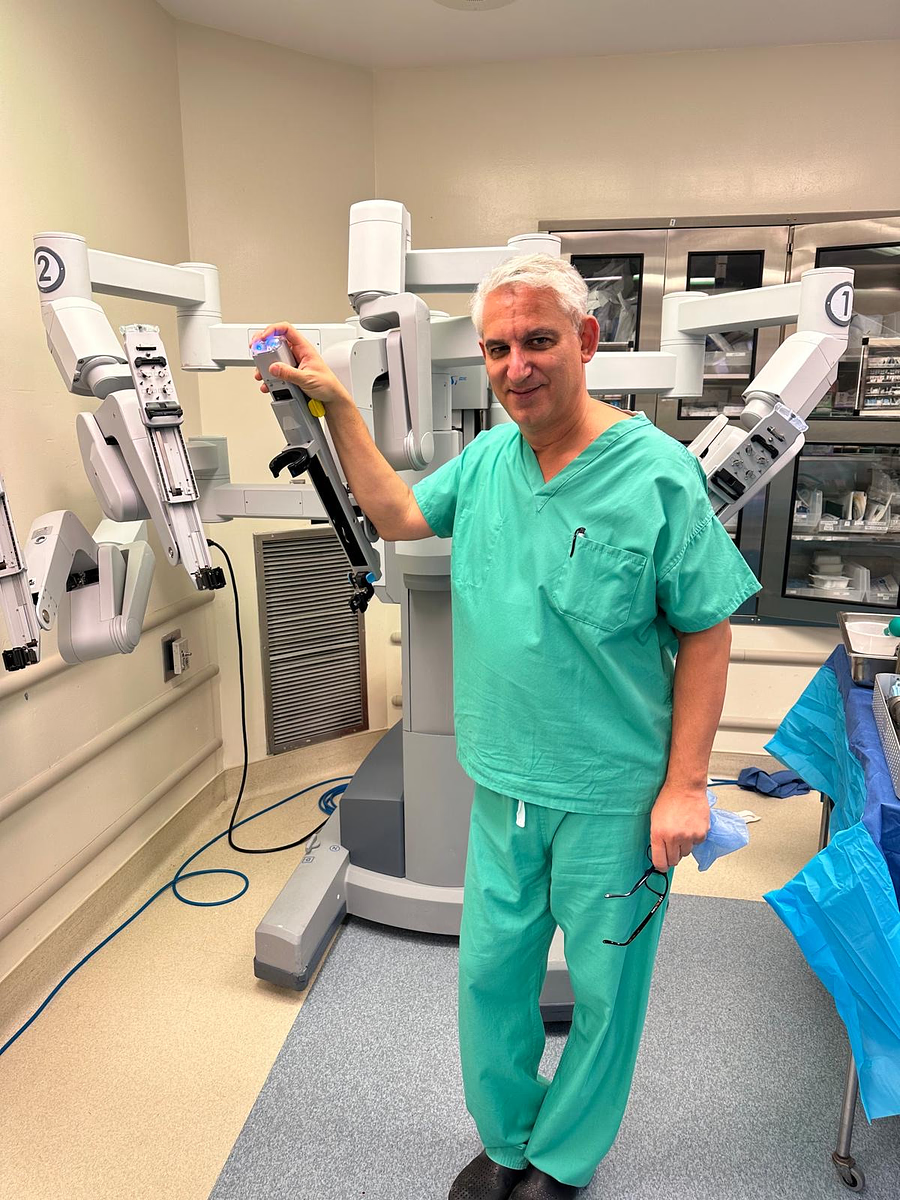
Dr. David Samadi is internationally recognized for his expertise in robotic prostate cancer surgery. His SMART™ surgical approach focuses on:
- complete cancer removal
- nerve preservation when possible
- faster functional recovery
- protection of quality of life
The foundations of modern prostatectomy were established decades ago, but techniques continue to evolve. Dr. Samadi has helped refine these advances and is widely known as a Key Opinion Leader in prostate cancer treatment.
He has been featured on major news networks including Fox News and Newsmax for his expertise in men’s health and cancer surgery.
Survival Is Only Part of the Picture
Patients often focus only on survival numbers.
But long-term quality of life also matters:
- urinary control
- sexual function
- recovery time
- emotional well-being
Modern treatment aims to address both cancer control and life after prostate cancer treatment.
That balance is central to Dr. Samadi’s approach.
What Determines an Individual Patient’s Prognosis
Several factors influence outcomes beyond stage:
- tumor aggressiveness (Gleason score)
- PSA level
- overall health
- age
- treatment approach
- surgeon experience
Two patients with the same stage may have very different outcomes depending on these factors.
This is why personalized evaluation is essential.
Frequently Asked Questions
Which stage of prostate cancer has the highest survival rate?
Stage 1 and Stage 2 have extremely high survival rates when treated appropriately.
Can prostate cancer be cured?
Many localized prostate cancers can be cured with surgery or radiation.
Does surgery improve survival?
For many patients with localized cancer, surgery provides excellent long-term cancer control.
Should I panic if diagnosed with prostate cancer?
No. Many prostate cancers grow slowly and are highly treatable, especially when detected early.
Does early screening really matter?
Yes. Early detection dramatically improves survival and treatment options.
Why Patients Choose Dr. David Samadi
Patients across the U.S. and internationally seek treatment from Dr. Samadi because of his:
- decades of surgical experience
- advanced robotic prostatectomy techniques
- focus on functional preservation
- leadership in prostate cancer care
- national recognition in men’s health
His approach prioritizes both survival and long-term quality of life.
Contact Dr. Samadi
If you’ve been diagnosed with prostate cancer and want to understand your stage, prognosis, or treatment options, a consultation can help clarify your path forward.
Website: https://roboticoncology.com
Address: 485 Madison Avenue, 21st Floor, New York, NY 10022
Phone Number: 212-365-5000
 212-365-5000