
Hearing the words “stage 4 prostate cancer” is overwhelming. For most men, it immediately raises fears about life expectancy, quality of life, and whether anything meaningful can still be done. Patients often assume stage 4 means there are no real options left — and that’s simply not true.
According to Dr. David Samadi, stage 4 prostate cancer is serious, but it is not a single, uniform condition. How the disease behaves, how it’s treated, and what outcomes look like can vary dramatically depending on how and where the cancer has spread — and how early that spread is identified.
This guide explains what stage 4 prostate cancer actually means, how doctors think about it, and how experienced surgeons like Dr. Samadi approach treatment decisions with both cancer control and quality of life in mind.
What “Stage 4” Actually Refers To
Prostate cancer staging is based on how far the cancer has moved beyond the prostate gland.
Stage 4 means one of the following is true:
- The cancer has spread to nearby organs or tissues
- The cancer has spread to lymph nodes outside the pelvis
- The cancer has spread to distant areas, most commonly the bones
This is different from earlier stages, where the cancer is confined to the prostate or immediately surrounding tissue.
Dr. Samadi often explains to patients that stage 4 is about location, not speed. Some stage 4 cancers grow slowly and respond well to treatment. Others are more aggressive. Understanding which type you’re dealing with is critical.
Not All Stage 4 Prostate Cancer Is the Same
One of the most important distinctions Dr. Samadi makes during consultations is where the cancer has spread.
There’s a big difference between:
- Cancer limited to nearby lymph nodes
- Cancer involving a small number of bone spots
- Widespread metastatic disease
Patients with limited spread (sometimes called oligometastatic disease) may still benefit from aggressive, targeted treatment. In some cases, surgery remains part of the conversation — especially when managed by a surgeon with extensive experience in advanced prostate cancer cases.
Symptoms Men May Experience at Stage 4
Some men are surprised to learn they had advanced prostate cancer at all, because early symptoms of prostate cancer can be subtle.
Common symptoms may include:
- Bone pain (hips, spine, ribs)
- Fatigue that doesn’t improve with rest
- Unexplained weight loss
- Urinary changes or obstruction
- Pain or pressure in the pelvis or lower back
Dr. Samadi emphasizes that symptoms alone never tell the full story. Imaging, PSA trends, prostate biopsy results, and overall health matter far more when determining the best next step.
How Stage 4 Prostate Cancer Is Treated
Treatment is highly individualized. There is no one-size-fits-all approach.
Depending on the extent of spread, treatment may include:
- Hormone therapy (androgen deprivation)
- Advanced hormonal agents
- Chemotherapy
- Targeted radiation
- Surgery in select cases
- Combination therapy
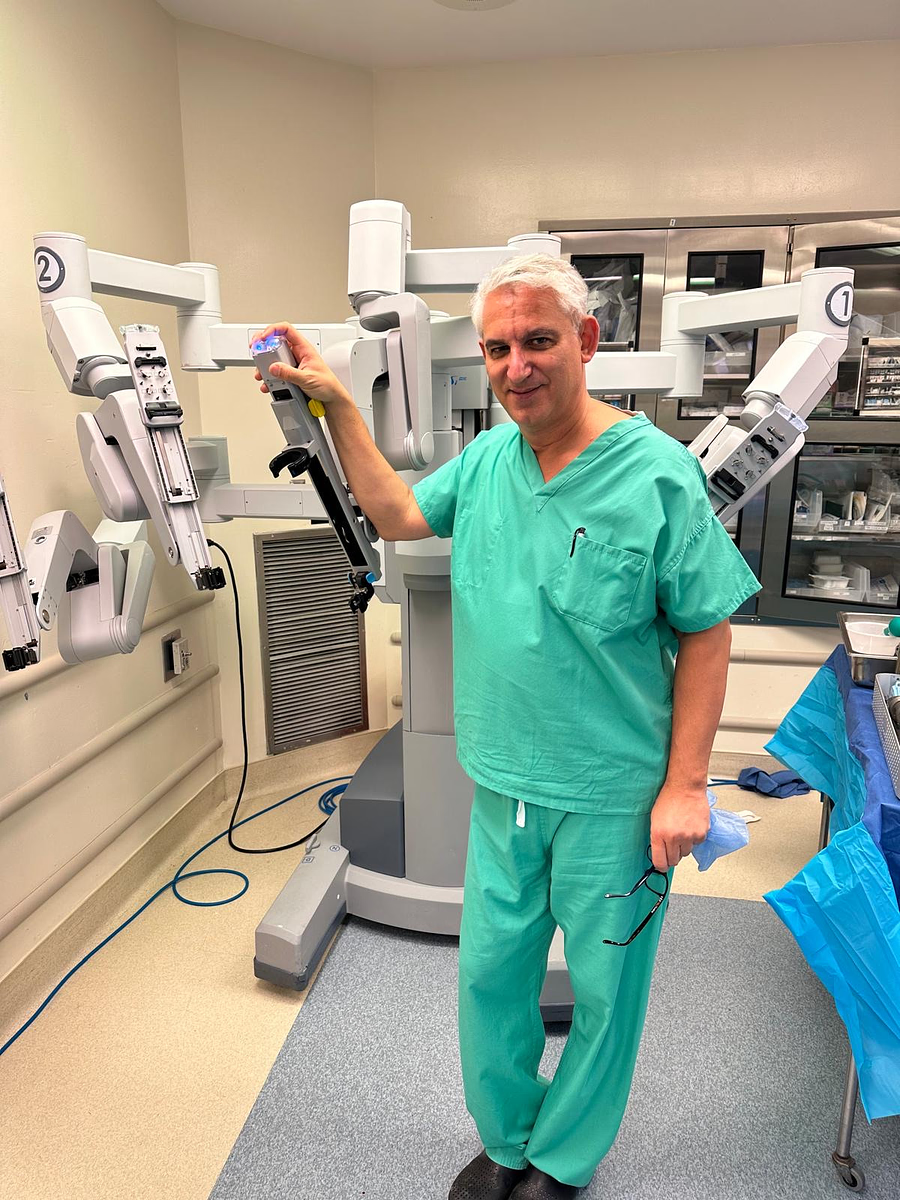
What sets Dr. Samadi apart is his willingness to evaluate all available options, including robotic prostate surgery when appropriate — not as a reflex, but as a calculated decision based on cancer biology and long-term outcomes.
Where Surgery Fits — and Where It Doesn’t
Many men assume surgery is automatically off the table at stage 4. That’s not always the case.
In carefully selected patients, removing the prostate can:
- Reduce overall tumor burden
- Improve response to systemic therapies
- Help with local symptom control
- Potentially extend survival in specific scenarios
Dr. Samadi has decades of experience managing complex prostate cancer cases and is known for evaluating surgery as part of a broader strategy — never in isolation.
Quality of Life Still Matters
One of the biggest misconceptions about stage 4 prostate cancer is that quality of life becomes secondary.
Dr. Samadi strongly disagrees with that mindset.
Even in advanced disease, treatment decisions must consider:
- Urinary control
- Sexual function where possible
- Pain management
- Independence and daily activity
- Emotional and psychological health
Preserving dignity and function is not optional — it’s part of responsible cancer care.

What Prognosis Really Means at Stage 4
Patients often ask for a single number. A timeline. A guarantee.
The reality is more nuanced.
Survival depends on:
- Extent and location of metastases
- Cancer aggressiveness
- Response to therapy
- Overall health
- Experience of the treating team
Dr. Samadi has treated men who live many productive years with advanced prostate cancer, particularly when managed proactively and strategically.
Frequently Asked Questions
Does stage 4 prostate cancer mean it’s terminal?
Not necessarily. Many men live for years with advanced prostate cancer, especially with modern therapies.
Is treatment still worth it at stage 4?
Yes. Treatment can slow progression, relieve symptoms, and improve both survival and quality of life.
Can surgery help at stage 4?
In selected cases, yes. This decision requires careful evaluation by an experienced surgeon.
Will I need hormone therapy forever?
Many patients require long-term hormonal management, but treatment plans evolve over time.
Should I get a second opinion?
Absolutely. Complex cancer decisions benefit from expert review.
Why Experience Matters at This Stage
Stage 4 prostate cancer requires more than protocol-based care. It requires judgment.
Dr. Samadi is world-renowned prostate cancer surgeon who is known for his work in prostate cancer surgery, a Key Opinion Leader frequently featured on Fox News and Newsmax, and a surgeon whose techniques are built on foundations established decades ago — refined through thousands of complex cases.
That experience matters most when the decisions are hardest.
Contact Dr. David Samadi
If you or a loved one has been diagnosed with advanced prostate cancer and need clarity on what stage 4 truly means — and what options still exist — a consultation is the next step.
Website: https://roboticoncology.com
Address: 485 Madison Avenue, 21st Floor, New York, NY 10022
Phone: 212-365-5000
The goal is not false reassurance.
It’s honest answers, expert guidance, and a plan built around you, not just a stage number.
 212-365-5000