
Most men don’t wake up one morning thinking they might have prostate cancer.
In fact, that’s part of the problem.
Early signs of prostate cancer are often quiet. No dramatic pain. No obvious warning sign that forces you to the doctor. And because of that, many men assume that feeling “mostly fine” means everything is fine.
According to Dr. David Samadi, one of the most common mistakes men make is waiting for symptoms that don’t always show up early. By the time something feels clearly wrong, the disease may already be more advanced.
This article walks through the earliest signs men tend to miss, what those symptoms actually mean, and how prostate cancer is typically caught before it causes major problems.
Why Early Prostate Cancer Is Easy to Miss
Prostate cancer usually grows slowly at first. That’s why many early-stage cases are found during routine screening, not because a man felt sick.
The prostate sits deep in the pelvis, just below the bladder and around the urethra. Small changes inside it don’t always translate into noticeable symptoms right away.
Dr. Samadi often explains this to patients during consultations: waiting for pain is not a strategy. Early detection relies more on awareness, testing, and understanding subtle changes.
The Most Common Early Signs Men Overlook
Early symptoms of prostate cancer, when they do appear, are often brushed off as “getting older” or blamed on stress, diet, or benign prostate enlargement.
Here are the signs Dr. Samadi tells men not to ignore.
Changes in Urination
This is usually the first category of symptoms, and also the most ignored.Men may notice:
- A weaker urine stream
- Difficulty starting or stopping urination
- Feeling like the bladder doesn’t fully empty
- Needing to urinate more often, especially at night
These symptoms don’t automatically mean cancer. Many men have benign prostate enlargement (BPH). But prostate cancer can cause similar changes, and the only way to tell the difference is proper evaluation.
Blood in the Urine or Semen
Even a small amount of blood is not normal.
Some men notice:
- Pink or reddish urine
- Blood-tinged semen
This doesn’t happen in every case, but when it does, it deserves immediate medical attention. Dr. Samadi considers this a hard stop symptom — something that should never be ignored or delayed.
Pelvic or Lower Back Discomfort
Early prostate cancer rarely causes severe pain, but some men report:
- A dull ache in the lower back
- Pressure in the pelvic area
- Discomfort when sitting for long periods
Because these symptoms overlap with musculoskeletal issues, many men never connect them to the prostate.
Erectile or Ejaculatory Changes
Subtle sexual changes can also be early clues, including:
- New difficulty maintaining erections
- Discomfort with ejaculation
- Decreased volume of semen
These symptoms alone don’t diagnose cancer, but when they appear alongside urinary changes, they raise the level of concern.
What Early Prostate Cancer Usually Does Not Cause
This part is just as important.
Early prostate cancer often does not cause:
- Sharp pain
- Weight loss
- Severe fatigue
- Obvious illness
That’s why relying on “feeling sick” is unreliable. Dr. Samadi emphasizes that many of his patients felt perfectly healthy at the time of diagnosis.
The Role of PSA Testing and Exams
Most early prostate cancers are discovered through:
- PSA blood testing
- Digital rectal exams (DRE)
- Advanced imaging when needed
A rising PSA doesn’t automatically mean cancer, but trends over time matter. Dr. Samadi looks at PSA in context — age, rate of change, prostate size, and overall risk profile.
This is where experience makes a difference. Not every elevated PSA needs surgery. And not every “normal” PSA means there’s no cancer.

Why Catching Prostate Cancer Early Matters
When prostate cancer is detected early:
- More treatment options are available
- Nerve-sparing surgery may be possible
- Urinary and sexual function can often be better preserved
- Cure rates are extremely high
Dr. Samadi’s surgical philosophy, developed over decades of experience, focuses on treating the cancer without unnecessarily sacrificing quality of life.
That balance is much harder to achieve when cancer is found late.
Dr. David Samadi’s Perspective on Early Detection
Prostate cancer surgery itself is not new. The foundations of prostate removal procedures were established decades ago.
What has evolved is technique.
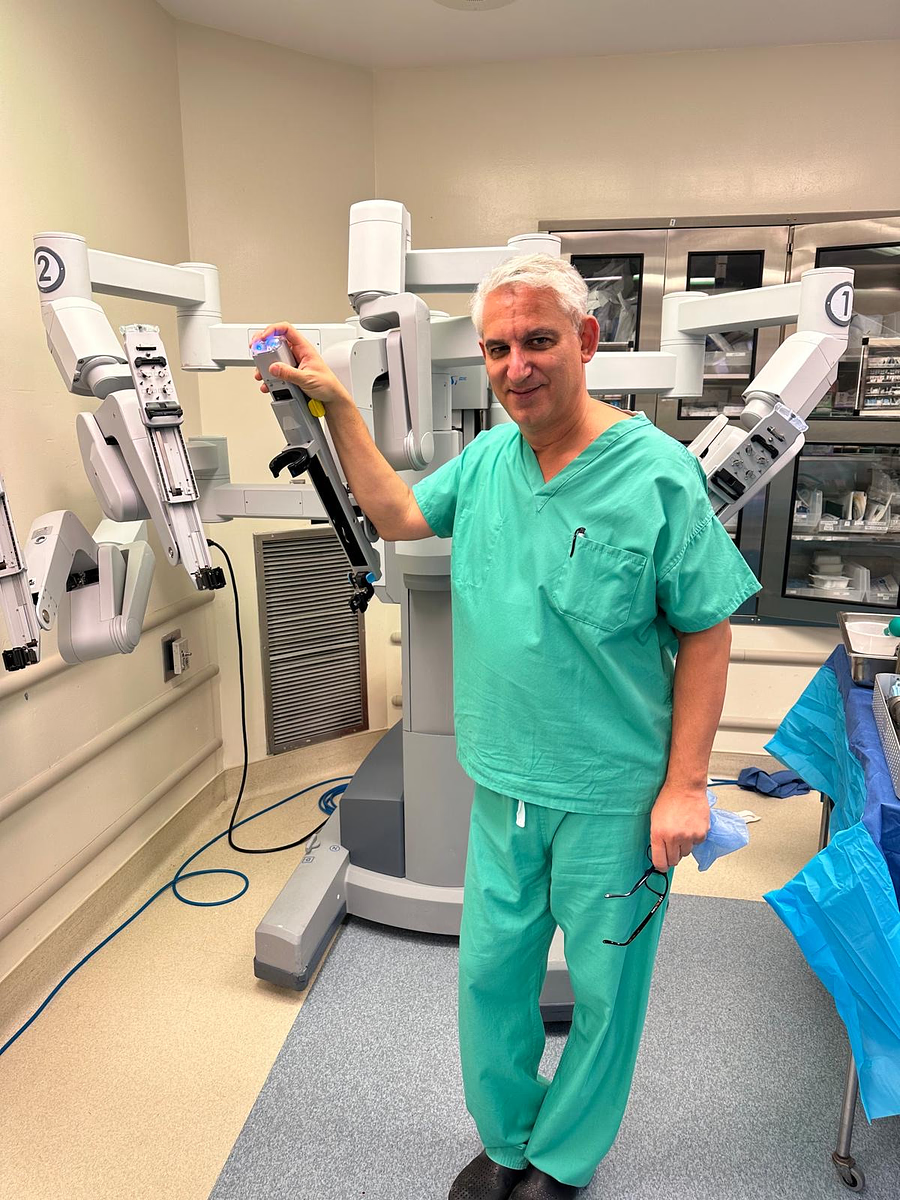
Dr. Samadi developed and refined his SMART procedure (Samadi Modified Advanced Robotic Technique) after performing thousands of prostate surgeries. His work focuses on precision, nerve preservation, and functional recovery — while never compromising cancer control.
This combination of experience and innovation is why Dr. Samadi is recognized internationally and frequently featured as a Key Opinion Leader on major networks such as Fox News and Newsmax, where he provides expert commentary on men’s health and prostate cancer treatment.
Patients often seek him out not just for surgery, but for clarity — understanding whether cancer is present, how aggressive it is, and what actually needs to be done.
Frequently Asked Questions
At what age should men start paying attention to prostate cancer symptoms?
Most men should begin discussions around screening at age 50, or earlier if there’s a family history or higher risk.
Can prostate cancer exist without any symptoms at all?
Yes. Many early-stage cancers cause no noticeable symptoms.
Does urinary trouble always mean prostate cancer?
No. BPH is very common. But symptoms should still be evaluated.
Is PSA testing enough on its own?
PSA is a tool, not a diagnosis. It must be interpreted by an experienced physician.
If prostate cancer is caught early, is it curable?
In many cases, yes. Early detection is strongly associated with excellent outcomes.
When to Get Checked
Dr. Samadi advises men to seek evaluation if they:
- Notice persistent urinary changes
- See blood in urine or semen
- Have a rising PSA
- Have a family history of prostate cancer
- Simply want a clear, expert opinion
- Waiting rarely improves outcomes. Information does.
Contact Dr. David Samadi
If you’re concerned about prostate cancer symptoms or want expert guidance on screening, diagnosis, or treatment options, a consultation with Dr. Samadi can provide clarity and direction.
Website: https://roboticoncology.com
Address: 485 Madison Avenue, 21st Floor, New York, NY 10022
Phone: 212-365-5000
Early prostate cancer doesn’t always announce itself loudly.
The key is knowing what to listen for — and who to trust when questions arise.
 212-365-5000