
The word “cancer” changes everything.
For most men, the moment they hear prostate cancer, the room gets quiet. It’s hard to remember what the doctor says next. The mind jumps ahead — surgery, survival, side effects, worst-case scenarios.
But here’s something important.
A prostate cancer diagnosis is not the same thing as an emergency.
In many cases, there is time to think. Time to understand. Time to choose the right treatment. And the decisions made in the first few weeks matter more than people realize.
That’s why patients from across the country seek out Dr. David Samadi after diagnosis. He has spent decades performing advanced robotic prostate cancer surgery and has built his reputation around two priorities:
Remove the cancer.
Protect quality of life.
Understanding what actually happens next helps remove fear and replace it with clarity.
Step 1: Confirming the Details (Not Just the Word “Cancer”)
Not all prostate cancer is the same.
The next steps usually involve reviewing:
- PSA levels
- Prostate Biopsy results
- Gleason score (how aggressive the cancer looks)
- MRI imaging
- Tumor location
- Whether the cancer is confined to the prostate
Dr. Samadi carefully reviews all of these factors before recommending anything.
A low-grade, localized cancer is very different from a more aggressive case. The treatment plan depends on the details — not just the diagnosis.
Step 2: Understanding Your Risk Level
After reviewing biopsy and imaging results, patients are generally categorized into risk levels:
- Low risk
- Intermediate risk
- High risk
This classification helps determine whether:
- Active surveillance is appropriate
- Surgery is recommended
- Radiation should be considered
- Additional therapy may be needed
Dr. Samadi does not believe in rushing into treatment without fully understanding the risk profile. Precision comes before action.
Step 3: Discussing All Treatment Options
Many patients assume surgery is automatic.
It isn’t.
Depending on the case, options may include:
- Active surveillance (monitoring carefully)
- Robotic prostatectomy
- Radiation therapy
- Combination treatments
Dr. David Samadi is widely known for his advanced robotic surgical technique, but he does not push surgery blindly. He evaluates whether surgery offers the best long-term cancer control and functional preservation for that specific patient.
The conversation is individualized.
Step 4: If Surgery Is Recommended
When surgery is the best option, most patients today undergo robotic radical prostatectomy.
Dr. Samadi’s technique focuses heavily on:
- Cancer removal precision
- Nerve-sparing when medically safe
- Maximum urethral preservation
- Protecting urinary control
- Preserving erectile function whenever possible
This approach is not experimental. Robotic prostatectomy has been established for decades, and Dr. Samadi has refined his own surgical method over thousands of procedures.
He is internationally recognized for functional outcomes — not just cancer removal.
That distinction is important.
Why Surgeon Experience Matters So Much
Robotic systems do not perform surgery on their own.
The surgeon controls every movement.
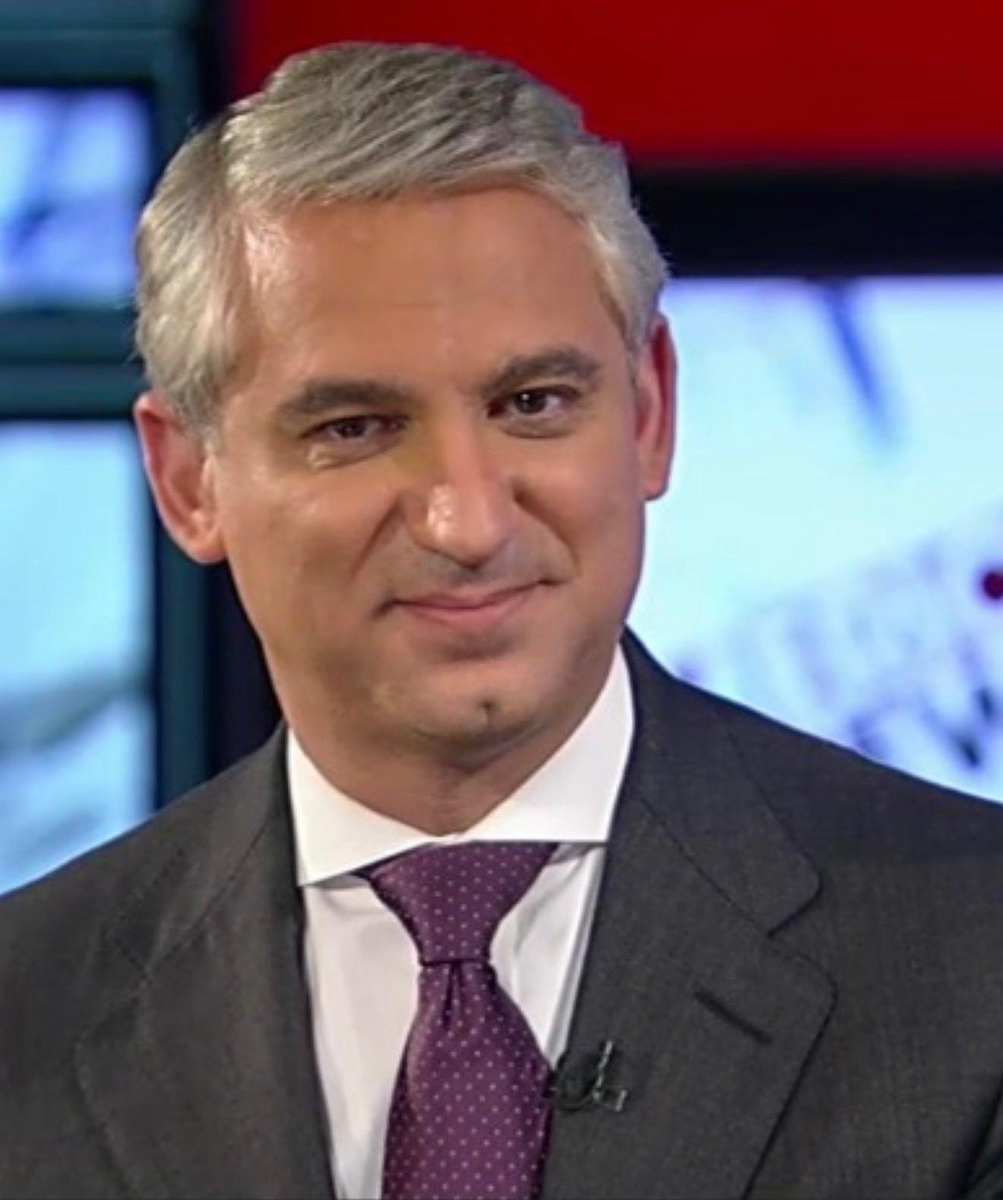
Dr. David Samadi is a world-renowned prostate cancer surgeon and has been featured as a Key Opinion Leader on Fox News and Newsmax, discussing prostate cancer treatment and men’s health issues at a national level.
His reputation is built on:
- Decades of surgical innovation
- High-volume prostate cancer cases
- Functional outcome focus
- National media recognition
- Commitment to patient education
Patients travel to New York specifically for this level of expertise.
Because when it comes to cancer — experience matters.
Step 5: Planning for Recovery
If surgery is chosen, patients want to know what recovery looks like.
Most men experience:
- Short hospital stay
- Temporary catheter
- Gradual return of urinary control
- Gradual return of erectile function
- Follow-up PSA monitoring
Recovery is not instant. But modern robotic techniques significantly improve the likelihood of preserving function.
Dr. Samadi sets realistic expectations while emphasizing proactive recovery planning.
Step 6: Monitoring After Treatment
After treatment, PSA becomes the marker of success.
PSA levels should drop to nearly undetectable levels after prostate removal.
Regular follow-up testing ensures:
- No recurrence
- Ongoing health monitoring
- Early detection if anything changes
Long-term monitoring is part of comprehensive cancer care.
Emotional Side of Diagnosis
Prostate cancer affects more than the body.
It affects:
- Confidence
- Relationships
- Sexual health
- Identity
- Mental well-being
Dr. Samadi emphasizes open communication so patients understand both medical and quality-of-life implications before making decisions.
Clarity reduces fear.
What Patients Should Do Immediately After Diagnosis
Instead of panicking, focus on:
- Getting a second opinion if needed
- Reviewing imaging carefully
- Understanding your Gleason score
- Asking about nerve-sparing eligibility
- Choosing a surgeon based on experience
- Avoiding rushed decisions
A prostate cancer diagnosis is serious — but it is often highly treatable when addressed properly.
Frequently Asked Questions
Is prostate cancer always life-threatening?
Many cases are slow-growing and highly treatable when caught early.
Should I get surgery immediately?
Not always. Treatment timing depends on risk level and aggressiveness.
How long do I have to decide?
In most localized cases, there is time to gather information and make a thoughtful decision.
Does robotic surgery improve outcomes?
Robotic surgery allows better visualization and precision, but surgeon expertise matters most.
Why do patients travel to Dr. Samadi?
Because of his decades of experience, advanced surgical techniques, and focus on preserving quality of life.
Contact Dr. David Samadi
If you have recently been diagnosed with prostate cancer and want a thorough, experience-driven evaluation, a consultation is the next step.
Dr. David Samadi
Website: https://roboticoncology.com
Address: 485 Madison Avenue, 21st Floor, New York, NY 10022
Phone: 212-365-5000
You deserve clarity, experience, and a treatment plan tailored specifically to you.
 212-365-5000