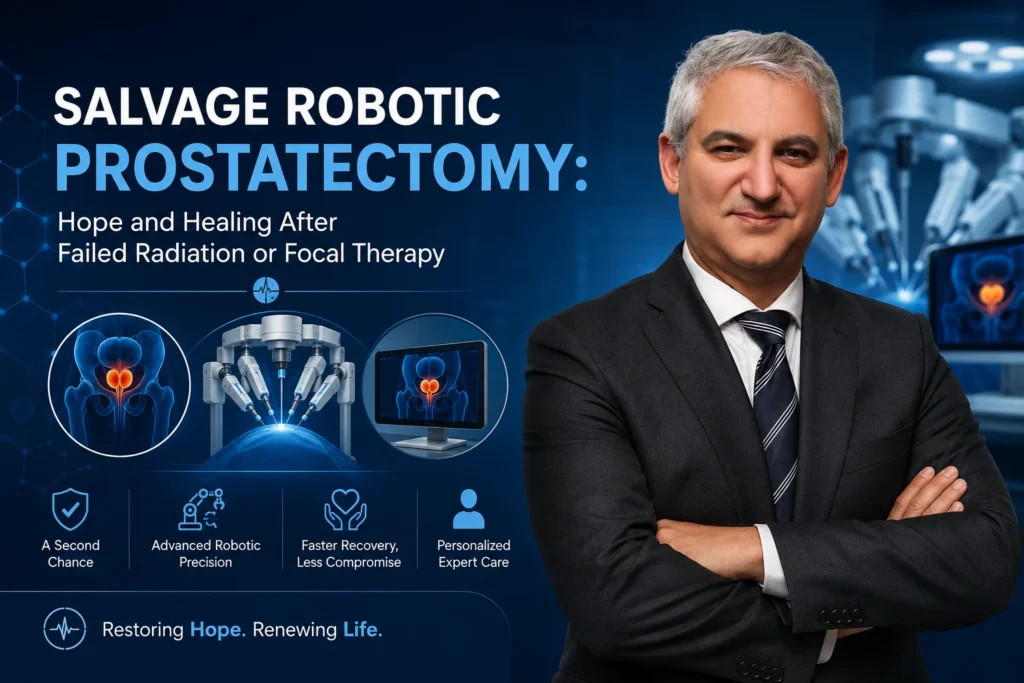
Discovering that your prostate cancer has returned or persisted after undergoing initial radiation therapy, proton beam treatment, brachytherapy (seeds), or focal therapies like High-Intensity Focused Ultrasound (HIFU) is a devastating moment. Many men choose these non-surgical modalities under the assumption that they offer a definitive cure with lower initial physical impact. However, when localized cancer recurs in an irradiated or ablated prostate, patients often feel trapped, believing their therapeutic options have been exhausted.
In these challenging scenarios, Salvage Robotic Prostatectomy (SRP) serves as a vital secondary line of curative defense. Removing an intact, previously treated prostate gland is one of the most technically demanding procedures in modern urology, requiring rare surgical expertise.
As Director of Men’s Health at St. Francis Hospital & Heart Center in Roslyn, New York, Dr. David Samadi provides men across Long Island and around the world with a proven path toward complete cure. Through his strict “Samadi Guarantee”—personally performing 100% of every procedure—Dr. Samadi navigates complex, scarred pelvic anatomy to eliminate recurrent disease while optimizing functional recovery.
The Anatomical Challenge of Salvage Surgery
Performing a primary radical prostatectomy on an untreated gland involves navigating natural, clear tissue planes. In stark contrast, a salvage prostatectomy requires operating on tissue that has undergone profound biological changes due to prior energy exposure:
- Radiation Fibrosis & Dense Scarring: Radiation therapy damages the micro-vascular supply of the pelvis, causing healthy surrounding structures to coalesce into dense, rigid scar tissue (adhesions).
- Obliterated Surgical Planes: The natural, delicate tissue boundaries separating the prostate from the rectum, bladder neck, and neurovascular bundles are often completely blurred or frozen.
- Tissue Fragility: Irradiated or ablated tissues exhibit significantly reduced elasticity and impaired healing capacity, elevating the risk of rectal injury, urinary leaks, and severe incontinence in inexperienced hands.
Because of these heightened technical risks, many community urologists refuse to perform salvage prostatectomies. Successfully executing this complex procedure demands a master surgeon with extensive experience across open, laparoscopic, and robotic techniques.
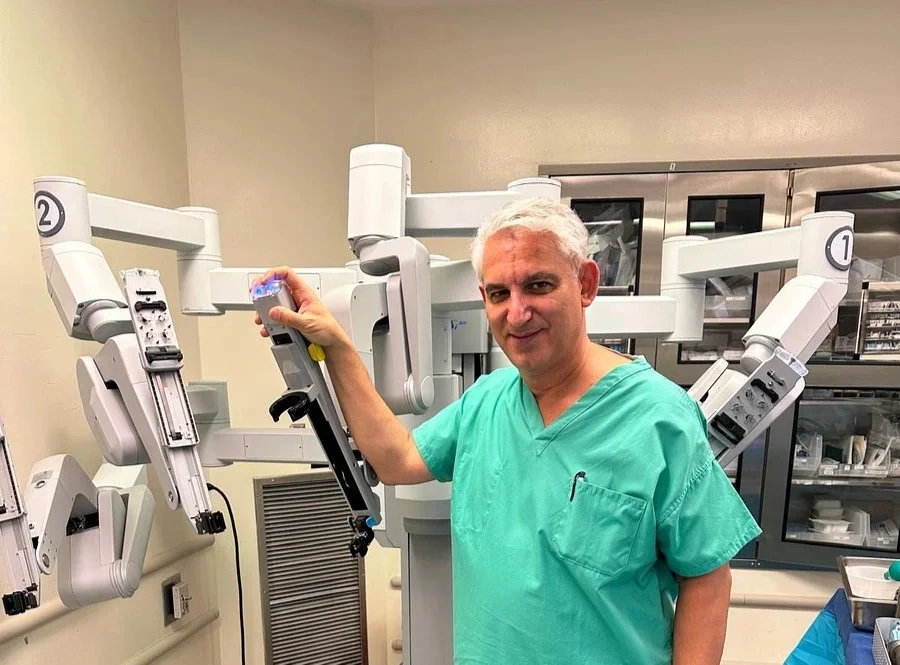
Why Dr. David Samadi’s Expertise Matters in Salvage Cases
With over 10,000 successful personal procedures completed, Dr. David Samadi possesses the deep anatomical intuition needed to overcome radiation-induced fibrosis. His unique surgical foundation combines formal fellowship training in open radical surgery, traditional laparoscopy, and advanced robotics—a rare triad that is invaluable when managing frozen pelvic anatomy.
[Failed Primary Therapy] ──> Dense Pelvic Fibrosis & Blurred Planes
│
▼
[Dr. Samadi Salvage Protocol] ──> Athermal Dissection + 10,000+ Case Precision
│
▼
[Definitive Cure] ──> Complete Oncological Clearance & Functional Support
Key technical elements of Dr. Samadi’s salvage approach include:
1. Athermal (Heat-Free) Dissection
Irradiated pelvic tissue is already biologically stressed. Standard electrosurgical cautery generates intense localized heat, which can cause severe “thermal spread,” further damaging fragile nearby nerves or the rectal wall. Dr. Samadi utilizes cold micro-instruments to meticulously peel scar tissue away without introducing destructive heat.
2. Anatomical Tactile Sensation & 3D Vision
Utilizing the high-magnification 3D visual platform of the da Vinci console, Dr. Samadi accurately identifies microscopic tissue density shifts, isolating the boundary between the scarred prostate capsule and the adjacent rectum to ensure zero organ injury.
3. Clipless & Suture-Free Vascular Control
To protect the remaining functional urethral sphincter mechanism, Dr. Samadi deploys his proprietary clipless Dorsal Vein Complex (DVC) protocol. Avoiding heavy metal clips or bulky compressive sutures around radiation-altered tissue lowers inflammation and accelerates post-operative healing.
Comparing Outcomes: Primary vs. Salvage Robotic Surgery
| Surgical Metric | Primary Robotic Surgery (Untreated Gland) | Dr. Samadi Salvage Protocol (Post-Radiation/HIFU) |
| Surgical Field | Clear, natural anatomical planes | Dense fibrosis, scarred tissue, blurred boundaries |
| Primary Goal | Complete cure + “Trifecta” optimization | Definitive oncological clearance & complication avoidance |
| Surgical Expertise Required | Standard robotic training | Master-level volume (10,000+ cases) & tri-discipline training |
| Hospital Discharge | 99% discharged within 24 hours | Typically 24 to 48 hours for close monitoring |
| Pathological Outcome | Direct removal and verification | 100% pathological confirmation of persistent disease |
Reclaiming Peace of Mind Through Definitive Removal
The primary objective of a salvage robotic prostatectomy is achieving complete, permanent oncological control. Leaving a recurrent, radiation-resistant tumor inside the body risks rapid metastatic spread to the regional pelvic lymph nodes and skeletal system.
By physically removing the failed, diseased organ, salvage surgery provides what no secondary radiation or hormone therapy can: true pathological clarity. Pathologists can examine the extracted tissue in its entirety, verifying negative surgical margins and providing exact staging data to guide long-term recovery.
Conclusion
A recurrence after radiation, seeds, or HIFU is a formidable challenge, but it is not the end of your journey toward a cure. Through the advanced precision of Salvage Robotic Prostatectomy and the Samadi Guarantee at St. Francis Hospital in Roslyn, men across Long Island can safely overcome radiation-induced scar tissue. Entrusting your care to a master surgeon who personally executes every step ensures you receive the highest level of safety, diagnostic certainty, and oncological success.
If you are experiencing a rising PSA following radiation or focal therapy, contact the Samadi Robotics Center today at 212-365-5000 to schedule a confidential salvage consultation at our East Hills office located at 2200 Northern Blvd., Suite 120, Roslyn, NY.
 212-365-5000